The Gender Transformative Education Edition
The Gender Transformative Education Edition
It is often said that education is the pathway to social transformation, yet inequality quietly reproduces itself every day in the unspoken rules children absorb about gender, power, and possibilities of life within school walls. We may be working to address enrollment gaps between boys and girls, but the deeper question remains: what kind of education are children actually getting once they enter classrooms? Does it inspire them to critically question or does it tell them subtly to follow age old norms?

CONTENTS
THE LEDE

Listen
It is often said that education is the pathway to social transformation, yet inequality quietly reproduces itself every day in the unspoken rules children absorb about gender, power, and possibilities of life within school walls. We may be working to address enrolment gaps between boys and girls, but the deeper question remains: what kind of education are children actually getting once they enter classrooms? Does it inspire them to critically question or does it tell them subtly to follow age old norms?
This edition of Engendering Education focuses on the idea of a Gender Transformative Education System (GTES). The English word transformative is made out of two Latin words that mean ‘beyond’ and ‘form’ or ‘shape’. I put them together as ‘beyond the current form’ and GTES aims to do exactly that. It tries to take the system beyond even its current possibilities. It inspires us all to think afresh. GTES asks education systems to actively challenge regressive norms, stereotypes, and unequal power structures that continue to shape children’s lives. It recognises that transformation requires changes across policy, pedagogy, curriculum, teacher preparation, students’ participation, school culture, budgeting, leadership, and community participation.

At Breakthrough, a GTES approach forms the core of our scale-up work with state governments and education departments in Punjab and Odisha. Through Chanan Rishman in Punjab and Barnali in Odisha, we partner with the state governments to embed gender equity into public education systems. Using a train-the-trainer model, we support teachers, school leaders, and education systems with gender-responsive curriculum, teaching aids, and digital resource libraries. It is also worth noting that this transformational journey was not possible without the state governments’ whole-hearted participation.
Through our work with adolescents, teachers, and communities, we often encounter how deeply gender norms are normalised within everyday schooling. Girls are frequently expected to be quieter, more disciplined, and more responsible, while boys are encouraged to display confidence, dominance, physical strength, and emotional restraint.
Important efforts are already underway at the India Coalition for Education for Gender Equality, which you will have the chance to learn about in this edition. The Coalition seeks to collectively build social goods that can help embed gender equality into education systems at scale. Its work recognises that no single organisation can transform systems alone. Meaningful change requires collaboration, shared learning, and long-term commitment.
Globally, there is growing recognition that education systems must move beyond access and towards equity and transformation.
For this issue of Engendering Education, we chose the theme of Gender Transformative Education Systems because conversations on education today must move beyond access and towards agency, inclusion, and systemic change. The edition explores what it means to build schools where equality is not merely discussed, but practiced.
Our Cover Story by Dr. Pam Rajput and Dr. Rashmi Dwivedi, “Reimagining Classrooms: Translating Gender Transformative Education Systems into Everyday Schooling,” examines how schools both reproduce and challenge gender norms. It reflects on curriculum reform, teacher preparation, school culture, masculinity, leadership, and community engagement, while examining how policy can translate into everyday educational practice.
We then Close Up into the functioning of the India Coalition for Education for Gender Equality which brings together civil society organisations, researchers, and youth leaders working to build shared evidence and tools for systemic change in classrooms across India.
Our Changemaker for this edition is Sanjukta Mohapatra, a Cluster Resource Centre Coordinator from Odisha whose personal and professional journey reminds us that systemic change is ultimately carried forward by individuals who continue to challenge expectations despite resistance.
I hope this edition leaves you with both reflection and possibility. Reflection on the hidden and visible ways in which gender inequality continues to shape educational spaces, and the possibility of knowing that schools can also become sites of empathy, agency, and justice.
Happy reading!

Nayana Chowdhury
Editor-in-Chief, Engendering Education
READ MORE
CLOSE UP
Listen
India has 14.71 lakh schools with more than 1.01 crore teachers and nearly 24.69 crore students from pre-primary to higher secondary level from varied socio-economic backgrounds. This is according to the 2024-2025 statistics from the Ministry of Education. Education is an integral component of human development to which the government has frequently reiterated its commitment.
Since the state is committed to providing universal education, a large number of central and state level schemes exist to ensure that education reaches the last mile. However, there are gaps that exist in the implementation of these schemes. Millions of girls are still prevented from learning freely and do not really have a say in their futures. But there isn’t a shortage of schemes.
But can these schemes leverage each other’s strengths? Can the totality of the country’s education schemes be examined from a system’s perspectives? How does one consolidate ongoing work on the ground and provide policy level analysis from a broader perspective?
Birth of the India Coalition
These were some of the concerns which brought together organisations and individuals already deeply involved in education policy work under the umbrella of the India Coalition for Education for Gender Equality. This umbrella of organisations touches more than 50 million students across India, nearly half of them girls, through partnerships with state education departments and public school systems.
The nature of organisations involved in the India Coalition is diverse. Some work with programmes in government schools, a few undertake research, policy analysis and work with state governments, while others are philanthropists or multilateral agencies.
Formally launched in August 2025 and initially co-convened by the UN Girls’ Education Initiative (UNGEI) and Breakthrough, the coalition is now co-owned by its member organisations. It is a space where civil society organisations, researchers, multilaterals, funders, government allies, and youth leaders sit at the same table with one shared aim: to make gender equality a normal, built-in part of India’s education systems, not a side project.
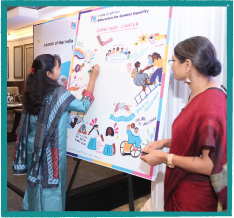
Launch event for the coalition
Shruti Johri, senior consultant, India Coalition & Thematics at Breakthrough says: “The India Coalition focuses partly on advocacy, policy propagation and part capability building. This is a task force for including gender transformative indicators through education in annual work plans and budgets of government policies.”
“We do not have direct agreements with government bodies. But the strength of our coalition is that members are connected with government ministries and departments through MoUs and agreements,” Shruti says. This includes a diverse group of ministries working on education, youth affairs, health and child welfare.
The coalition provides specific inputs, which are organised in broad categories of evidence translation and learning, pedagogy and curriculum support, youth engagement, strengthening capacity of teachers, communities and systems, and policy alignment and finance.
A clear identity
The India Coalition is very clear about what it is not. For example, it does not describe itself as an implementing body. Neither does it compete with member organisations’ programmes. It is a strategic platform for shared evidence, tools, and influence.
Its use is for agenda-setting, positioning, and collective thinking around education for gender equality, and not a pooled programme with shared budgets. The Coalition does not seek to supplement government schemes – rather it aligns with them. India’s policy intent on gender equality in education is clear. This is evident in the National Education Policy 2020, the Gender Inclusion Fund, and state schemes such as Kanyashree and Pudhumai Penn.
The collective does, however, recognise that the experience of a girl, a boy, or a non-binary child in a classroom doesn’t fully match that intent. Many children, especially from rural and marginalised communities, are less likely to read and write fluently, less likely to continue into higher grades, and more likely to face child marriage, gender-based violence, and narrow expectations about what they can study or become.
Meanwhile, evidence of what could work is scattered. Mechanisms, even when effective, operate in silos. For example, one programme shows the impact of delaying early marriage, while another programme improves girls’ confidence in STEM. A third has been created to build teacher capacity. Yet these experiences rarely travel across states or feed into systems that create textbooks, design teacher training, or draft budgets.
There are examples of strong models, committed teachers, and pockets of success. But evidence and learning is scattered across states and projects.
Coalition members recognise that change cannot happen at scale if work continues in isolation. “The Coalition targets capacity building and is a public goods platform. These platforms are meant for capability building and information dissemination which are held with the government. They do not create any parallel structures,” explains Shruti.
Examples are the DIKSHA portal held by the Ministry of Education or iGOT Karmayogi housed under the Department of Personnel and Training (DoPT). DIKSHA provides e-content for school education across the country while iGOT Karmayogi is a digital learning platform.
These issues are framed as a systems gap and not a lack of programmes. As a systems enabler, the Coalition accordingly aims to build shared tools, language and indicators as well as shared influence that can actually travel through and be absorbed by government systems.
Feminist values and a decolonial approach
A strong sense of shared feminist values is present in the activities of the coalition.
The agency of girls and young people must show up in classrooms, corridors, budgets, and data systems, not just in speeches. It also means paying attention to intersections of caste, class, religion, geography, and ability, and asking whose voices are missing.
Interestingly, a strong decolonial approach also informs the work of the Coalition. Instead of importing ready-made solutions, Indian realities and state innovations are prioritised first: cash transfers like Kanyashree and Ladli Laxmi, residential schooling through KGBVs (Kasturba Gandhi Balika Vidyalaya), local language materials in tribal districts, and gender-transformative curricula piloted with SCERTs. Communities are seen not as “beneficiaries” but as knowledge holders. Youth, teachers, and parents are considered co-designers and accountability partners.
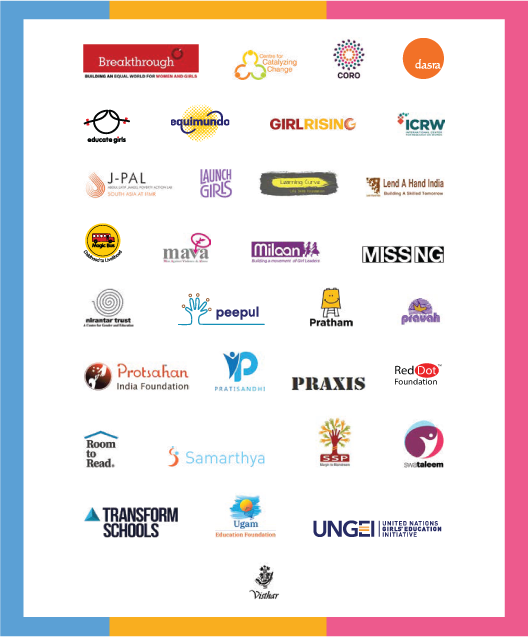
India Coalition Group Members
Shruti says: “We do not import prescriptive frameworks. We develop and localise our approach, including voices from the last mile.” The attempt is to bring in a lens from the perspective of equity.
“Even the effort to map out our own identity– identifying the problem to address, our inputs, and how we define success–we did it all from scratch. None of it is prescriptive or picked up blindly from any other country,” she adds.
The participation of youth is not seen as token but as a bold and affirmative expression. This is evident in how the Coalition works together by co-creating tools and reports. Facilitation roles are shared across organisations. Evidence and lived experience are treated as equally important. A constant thread running through all activities and plans takes the form of a question: does this shift power towards those who have been most excluded from decisions about education and gender?
The three non‑negotiables are: evidence, youth leadership, and shared public goods. The Coalition calls for young feminists and youth leaders to be recognised as system actors, with formal roles in governance bodies and decision-making processes, not just on panels.–
Dr. Seema Jayachandran, a Princeton University-based academic and coalition member, says: “The coalition should prioritise relationship-building across government, civil society, young people, educators, researchers and funders. With trust in place, it can build a shared GTE framework, help states use NEP 2020’s Gender Inclusion Fund effectively, and turn ideas into practical action.” Dr. Jayachandran’s comments were made in the context of the GTE mapping study conducted by the coalition.
What success could look like
In defining its mission, the organisation has also identified key areas where success should be achieved. This could be embedding of gender equality in education policy, the incorporation of gender-responsive financing in public budgets, embedding of GTE in teacher systems, and inclusive classrooms at scale.
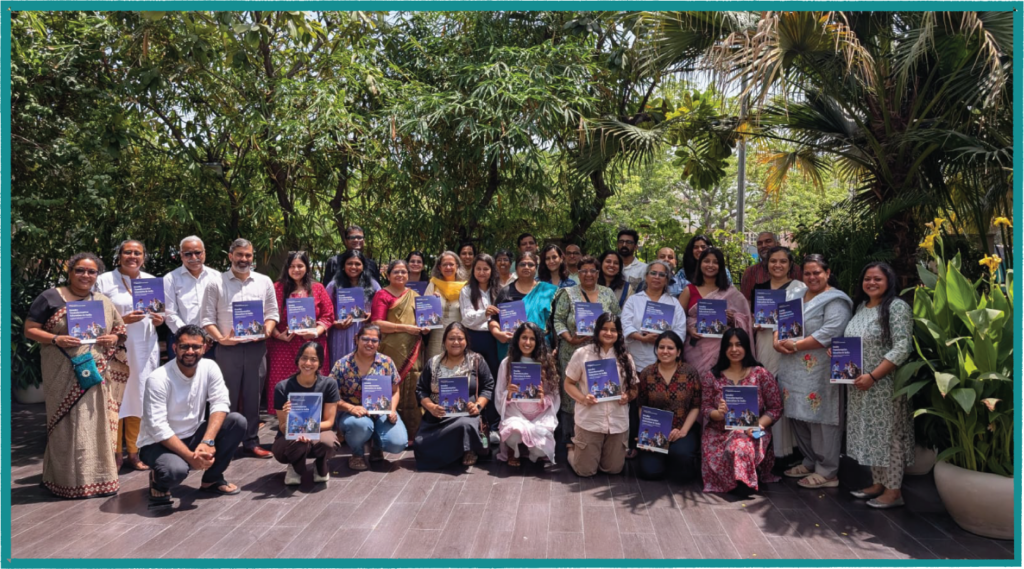
India Coalition Group
It asks for a Common Indicator Framework and MEL (Monitoring, Evaluation and Learning) dashboard that track norms, agency, safety,and inclusion that can be integrated into systems like UDISE, PARAKH, and state monitoring tools.
Evidence
Build a common indicators framework, an evidence repository, dashboards, and policy briefs.
Pedagogy and curriculum
Mapping existing resources, curating a shared repository, developing glossaries, and creating teacher‑facing tools aligned with systems.
Policy and finance
Tanslating evidence into policy recommendations, financing models, and “quick wins” in policies and budgets.
Teacher–community–system capacity
Strengthening capacities across teachers, communities, and system actors without placing the full burden on teachers’ shoulders.
Youth leadership
Set up a youth advisory board, define youth participation models, and make sure youth influence cuts across all working groups.
READ MORE
COVER STORY
Listen
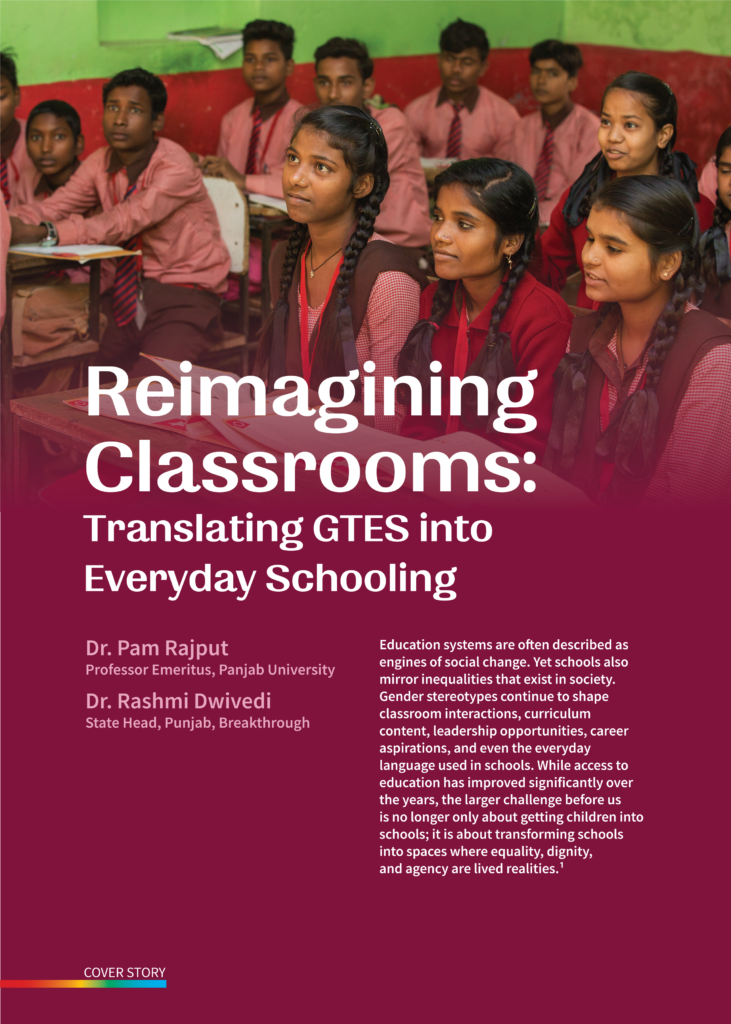
Education systems are often described as engines of social change. Yet schools also mirror inequalities that exist in society. Gender stereotypes continue to shape classroom interactions, curriculum content, leadership opportunities, career aspirations, and even the everyday language used in schools. While access to education has improved significantly over the years, the larger challenge before us is no longer only about getting children into schools; it is about transforming schools into spaces where equality, dignity, and agency are lived realities.¹
This is where the idea of a Gender Transformative Education System (GTES) becomes critical. GTES goes beyond gender-sensitive or gender-responsive education. It seeks to challenge and transform unequal power structures, stereotypes, and social norms that perpetuate discrimination and exclusion. Internationally, organisations such as UNICEF and UNGEI have emphasised that gender-transformative education must work across the entire education ecosystem—from policy and curriculum to pedagogy, teacher training, leadership, and community engagement.²
In the Indian context, the conversation around gender in education has often remained limited to enrolment, retention, and safety of girls. These are undoubtedly important concerns. However, the vision of gender transformative education finds echo in the New Education Policy (2020) which emphasises on equity and inclusion.
The policy provides for a gender inclusion fund (GEF) for promoting critical thinking and the normative foundation for a gender just system in schooling through gender sensitive pedagogy, teacher leadership, curricular reforms, etc. But it goes without saying that policies only create enabling frameworks and spaces while transformative education asks deeper questions.
What messages are children receiving about gender through textbooks, classroom practices, and institutional cultures? Are boys and girls equally encouraged to lead, question, innovate, and dream? Are schools equipping children to critically reflect on discrimination, power, and inclusion? Most importantly, are educators themselves prepared to challenge the biases they may unconsciously carry?
A complex and promising journey towards GTES
Our experience as an educationist and policy practitioner respectively has shown that the journey towards GTES is both promising and deeply
complex. The real challenge lies in translating the philosophy of gender transformation into everyday educational practice.
One of the first barriers emerges within curriculum and textbooks. Textbooks are not neutral documents; they communicate social values and cultural expectations. Despite significant progress, many learning materials continue to reproduce traditional gender roles.
Women are still disproportionately represented in caregiving roles, while men dominate leadership, science, and public life narratives. Such representations silently shape children’s aspirations and understanding of what is “appropriate” for different genders.³ Curriculum reform, therefore, must go beyond token inclusion of women achievers or isolated chapters on equality.
A transformative curriculum critically examines representation, language, examples, illustrations, and pedagogical activities.
It should normalise diversity, challenge stereotypes, and encourage critical thinking around identity, discrimination, and inclusion. Equally important is ensuring that curriculum reflects intersectionality—recognising how gender interacts with caste, class, disability, geography, and other forms of marginalisation.⁴
Curriculum alone cannot bring transformation unless pedagogy changes alongside it.
A gender-transformative classroom is not only defined by what is taught, but by how learning takes place. Classroom interactions often unconsciously reproduce unequal power relations.
Teachers may call on boys more frequently in mathematics and science classes, expect girls to be more disciplined and compliant, or assign gendered responsibilities during activities. Boys may be encouraged to speak assertively, while girls are praised for silence and obedience. If girls are consistently asked to maintain cleanliness while boys handle technical tasks, stereotypes become normalised.
Such patterns are rarely intentional; they are reflections of deeply embedded social conditioning. This is why teacher preparation becomes the cornerstone of GTES.
Teachers are among the most influential actors within the education system.
As highlighted in discussions on gender-transformative schooling, teachers are central to shaping values, behaviours, and aspirations among young people.⁵
Yet teacher education programmes often treat gender as a peripheral topic rather than a core pedagogical concern. A few theoretical sessions on gender concepts cannot prepare teachers to navigate the complex realities of discrimination, exclusion, bullying, and identity within schools.
Educators need sustained engagement that enables reflection on their own beliefs, biases, and lived experiences. Capacity-building initiatives must move from information dissemination to critical self-reflection and practice-based learning.⁶
In many training sessions conducted with teachers and school leaders, a recurring observation has been that educators are willing to engage with gender issues when provided safe and non-judgmental spaces for dialogue. Teachers themselves operate within the same patriarchal structures that influence students. Many carry anxieties around discussing topics such as gender identity, menstruation, masculinity, consent, or inclusion because they have never received institutional support or structured guidance. Therefore, a GTES approach must invest in continuous mentoring, peer learning, and institutional support rather than one-time training workshops.
The impact of school culture
Another critical dimension is school culture. Schools communicate values not only through lessons but through routines, rules, infrastructure, and relationships. Morning assemblies, sports participation, seating arrangements, leadership roles, sanitation facilities, disciplinary practices, and grievance mechanisms all contribute to shaping children’s understanding of gender and power.⁷
If leadership opportunities disproportionately favour boys, confidence gaps widen over time. If schools fail to address gender-based bullying or harassment, silence and fear become institutionalised. A transformative education system therefore requires schools to consciously examine the “hidden curriculum” embedded within institutional practices.
Importantly, GTES is not about focusing only on girls. It is equally about engaging boys and questioning harmful constructions of masculinity. Boys are often socialised into ideas of dominance, emotional suppression, and aggression. Education systems must create spaces where boys can develop empathy, emotional literacy, and respect for diversity. Unless boys and men become active participants in gender equality, transformation will remain incomplete.⁸
Community engagement is another essential but often underestimated component. Schools do not function in isolation from society. Many progressive classroom efforts encounter resistance when they challenge entrenched social norms around mobility, early marriage, subject choices, or career aspirations. Parents and communities may support girls’ education but still expect daughters to prioritise domestic responsibilities over ambition.
Therefore, education systems must build stronger partnerships with families and communities. Dialogue with parents, school management committees, adolescent groups, and local leaders becomes crucial in creating enabling ecosystems for change. Community ownership strengthens the sustainability of gender-transformative practices.⁹
Changes at the system level
One of the most significant lessons from implementation experience is that system-level buy-in matters enormously.
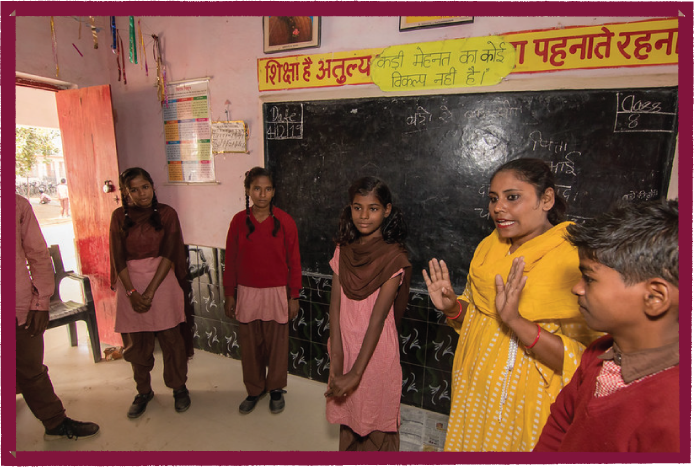
Gender transformation cannot depend solely on individual champions. Institutional mechanisms are necessary to sustain momentum. This includes integrating gender indicators into school quality frameworks, teacher appraisal systems, curriculum review processes, and educational leadership training. It also requires political commitment and administrative ownership across all levels of governance.
Encouragingly, there is growing recognition globally and nationally that education must move beyond access towards equity and transformation. The discourse on GTES has expanded from advocacy spaces into policy conversations, teacher education, and curriculum reform processes. Yet the gap between policy intent and classroom reality remains substantial.
A gender-transformative education system ultimately envisions schools where every child—regardless of gender or identity—feels seen, respected, safe, and empowered to realise their potential. It imagines classrooms where questioning stereotypes is encouraged, diversity is normalised, and equality is practiced rather than preached.
The future of education must therefore not only prepare children for jobs and examinations but also for citizenship, empathy, and social justice. In a deeply unequal world, education systems cannot remain passive observers of discrimination. They must become active sites of transformation. Only then can schools truly become spaces where equity is not an aspiration written into policy documents, but a lived experience shaping the next generation.¹⁰
READ MORE
CHANGE MAKER
Listen
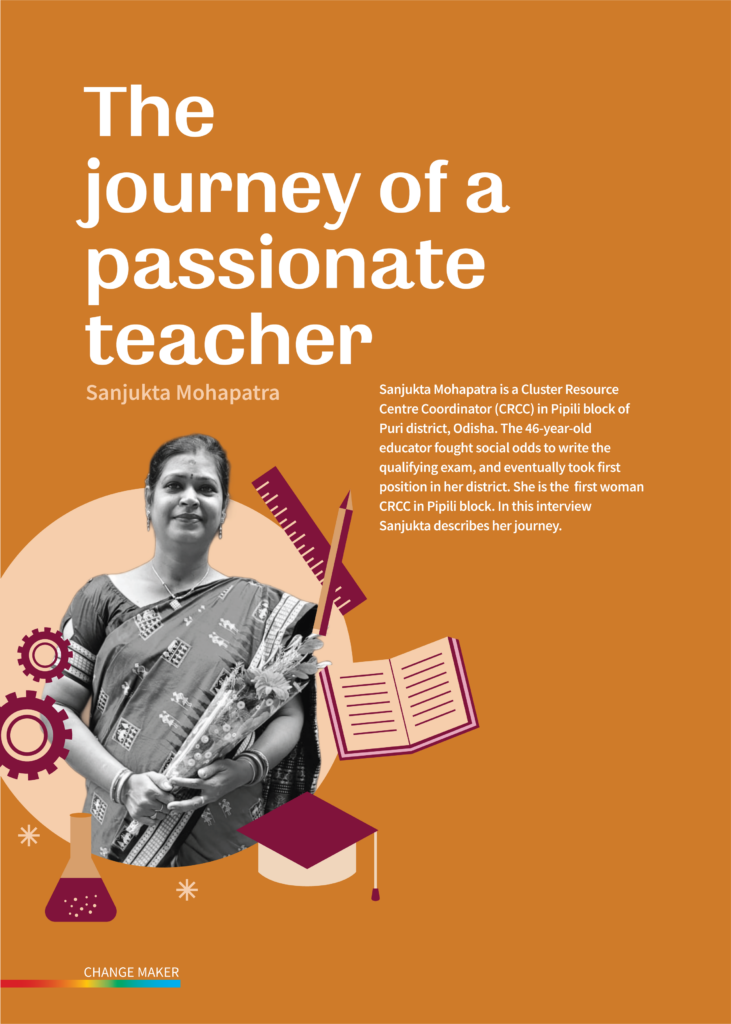
Sanjukta Mohapatra is a Cluster Resource Centre Coordinator (CRCC) in Pipili block of Puri district, Odisha. The 46-year-old educator fought social odds to write the qualifying exam, and eventually took first position in her district. She is the first woman CRCC in Pipili block. In this interview Sanjukta describes her journey.
What were your early childhood years like?
My father was a school teacher. I was influenced by his passion for teaching. My father was also a tutor and students came home for coaching. In his absence, I would teach them. Even while playing with my friends, I would play the part of a teacher.
After I completed my graduation, my father encouraged me to appear for the CT (certified teacher) entrance examination. We are three sisters and all of us are teachers. We were strongly inspired by our father from whom we learned that a teacher is a society maker, social engineer, and nation builder.
What made you want to become a CRCC?
I was working as an Assistant Teacher in foundational literacy and numeracy (FLN). I was also selected as a resource person for various training programmes. When a visioning test* was conducted at Puri for selecting a new CRCC, our Block Education Officer and Assistant Block Education Officer motivated me to apply for it.
I initially hesitated because of the workload. However, they constantly encouraged me and I finally appeared for the examination.
*A visioning test is conducted in two parts. The first part is a written test on educational and development issues. The second part is a group discussion and viva on challenges and issues in elementary education.
What were your challenges?
A lot of people felt I would not be able to manage a position with so many responsibilities. For many years, no woman had been in the post of CRCC in my block. But I was determined and not only appeared for the exam but also got the first position in Puri district in the 2025-2026 session. We were tested for language, mathematics, science, and social studies. There was also a group discussion and viva.
My foremost responsibility is supporting pedagogy in classroom interactions.
What are your responsibilities as the CRCC?
I am the coordinator for 12 schools in a radius of 4-5 km. I have many academic and administrative responsibilities. I am involved in monitoring and data collection. I have to visit different schools to observe and check the state of infrastructure, mid-day meals, drinking water facilities, curricular and co-curricular activities. The health and hygiene of students is very important, so I also have to monitor the state of health checkups and medicine distribution. In addition, I also have to look into teaching by subject teachers, health and hygiene of students and other extra-curricular activities. As a cluster coordinator, I participate in monthly sharing meetings in which all teachers of a cluster gather to discuss different school related activities.
What has been your role in GTES?
I am an active participant in Barnali, the gender equality curriculum programme of the Odisha government. I attend the training sessions and share my learnings and knowledge material with my students. I teach them how equality and leadership has to be shared among girls and boys.
What are the challenges in imparting a GTES mindset?
We are in an interior part of the state. Girls do not have opportunities and are not encouraged. They are expected to marry early and they are not allowed to progress. However, things are changing slowly.
What are your future goals and aspirations?
I have an interest in politics which I want to explore after retirement. I am also an active member of social organisations. Social work is another aim of my life. Teaching students free of cost is also an important goal.
As a member of the Barnali state resource group (SRG), I also try my best to see society from a gender lens. Everyone should get their rights in an equitable manner despite differences, disparity, and gender biasedness. I teach lessons from the Barnali programme during my visits to schools. I raise my voice when differences are created among boys and girls in society. The primary aim of my life is to see a gender equitable society.
READ MORE
CONTENTS
THE LEDE
Listen
It is often said that education is the pathway to social transformation, yet inequality quietly reproduces itself every day in the unspoken rules children absorb about gender, power, and possibilities of life within school walls. We may be working to address enrolment gaps between boys and girls, but the deeper question remains: what kind of education are children actually getting once they enter classrooms? Does it inspire them to critically question or does it tell them subtly to follow age old norms?
This edition of Engendering Education focuses on the idea of a Gender Transformative Education System (GTES). The English word transformative is made out of two Latin words that mean ‘beyond’ and ‘form’ or ‘shape’. I put them together as ‘beyond the current form’ and GTES aims to do exactly that. It tries to take the system beyond even its current possibilities. It inspires us all to think afresh. GTES asks education systems to actively challenge regressive norms, stereotypes, and unequal power structures that continue to shape children’s lives. It recognises that transformation requires changes across policy, pedagogy, curriculum, teacher preparation, students’ participation, school culture, budgeting, leadership, and community participation.
At Breakthrough, a GTES approach forms the core of our scale-up work with state governments and education departments in Punjab and Odisha. Through Chanan Rishman in Punjab and Barnali in Odisha, we partner with the state governments to embed gender equity into public education systems. Using a train-the-trainer model, we support teachers, school leaders, and education systems with gender-responsive curriculum, teaching aids, and digital resource libraries. It is also worth noting that this transformational journey was not possible without the state governments’ whole-hearted participation.
Through our work with adolescents, teachers, and communities, we often encounter how deeply gender norms are normalised within everyday schooling. Girls are frequently expected to be quieter, more disciplined, and more responsible, while boys are encouraged to display confidence, dominance, physical strength, and emotional restraint.
Important efforts are already underway at the India Coalition for Education for Gender Equality, which you will have the chance to learn about in this edition. The Coalition seeks to collectively build social goods that can help embed gender equality into education systems at scale. Its work recognises that no single organisation can transform systems alone. Meaningful change requires collaboration, shared learning, and long-term commitment.
Globally, there is growing recognition that education systems must move beyond access and towards equity and transformation.
For this issue of Engendering Education, we chose the theme of Gender Transformative Education Systems because conversations on education today must move beyond access and towards agency, inclusion, and systemic change. The edition explores what it means to build schools where equality is not merely discussed, but practiced.
Our Cover Story by Dr. Pam Rajput and Dr. Rashmi Dwivedi, “Reimagining Classrooms: Translating Gender Transformative Education Systems into Everyday Schooling,” examines how schools both reproduce and challenge gender norms. It reflects on curriculum reform, teacher preparation, school culture, masculinity, leadership, and community engagement, while examining how policy can translate into everyday educational practice.
We then Close Up into the functioning of the India Coalition for Education for Gender Equality which brings together civil society organisations, researchers, and youth leaders working to build shared evidence and tools for systemic change in classrooms across India.
Our Changemaker for this edition is Sanjukta Mohapatra, a Cluster Resource Centre Coordinator from Odisha whose personal and professional journey reminds us that systemic change is ultimately carried forward by individuals who continue to challenge expectations despite resistance.
I hope this edition leaves you with both reflection and possibility. Reflection on the hidden and visible ways in which gender inequality continues to shape educational spaces, and the possibility of knowing that schools can also become sites of empathy, agency, and justice.
Happy reading!
Nayana Chowdhury
Editor-in-Chief, Engendering Education
READ MORE
CLOSE UP
Listen
India has 14.71 lakh schools with more than 1.01 crore teachers and nearly 24.69 crore students from pre-primary to higher secondary level from varied socio-economic backgrounds. This is according to the 2024-2025 statistics from the Ministry of Education. Education is an integral component of human development to which the government has frequently reiterated its commitment.
Since the state is committed to providing universal education, a large number of central and state level schemes exist to ensure that education reaches the last mile. However, there are gaps that exist in the implementation of these schemes. Millions of girls are still prevented from learning freely and do not really have a say in their futures. But there isn’t a shortage of schemes.
But can these schemes leverage each other’s strengths? Can the totality of the country’s education schemes be examined from a system’s perspectives? How does one consolidate ongoing work on the ground and provide policy level analysis from a broader perspective?
Birth of the India Coalition
These were some of the concerns which brought together organisations and individuals already deeply involved in education policy work under the umbrella of the India Coalition for Education for Gender Equality. This umbrella of organisations touches more than 50 million students across India, nearly half of them girls, through partnerships with state education departments and public school systems.
The nature of organisations involved in the India Coalition is diverse. Some work with programmes in government schools, a few undertake research, policy analysis and work with state governments, while others are philanthropists or multilateral agencies.
Formally launched in August 2025 and initially co-convened by the UN Girls’ Education Initiative (UNGEI) and Breakthrough, the coalition is now co-owned by its member organisations. It is a space where civil society organisations, researchers, multilaterals, funders, government allies, and youth leaders sit at the same table with one shared aim: to make gender equality a normal, built-in part of India’s education systems, not a side project.
Launch event for the coalition
Shruti Johri, senior consultant, India Coalition & Thematics at Breakthrough says: “The India Coalition focuses partly on advocacy, policy propagation and part capability building. This is a task force for including gender transformative indicators through education in annual work plans and budgets of government policies.”
“We do not have direct agreements with government bodies. But the strength of our coalition is that members are connected with government ministries and departments through MoUs and agreements,” Shruti says. This includes a diverse group of ministries working on education, youth affairs, health and child welfare.
The coalition provides specific inputs, which are organised in broad categories of evidence translation and learning, pedagogy and curriculum support, youth engagement, strengthening capacity of teachers, communities and systems, and policy alignment and finance.
A clear identity
The India Coalition is very clear about what it is not. For example, it does not describe itself as an implementing body. Neither does it compete with member organisations’ programmes. It is a strategic platform for shared evidence, tools, and influence.
Its use is for agenda-setting, positioning, and collective thinking around education for gender equality, and not a pooled programme with shared budgets. The Coalition does not seek to supplement government schemes – rather it aligns with them. India’s policy intent on gender equality in education is clear. This is evident in the National Education Policy 2020, the Gender Inclusion Fund, and state schemes such as Kanyashree and Pudhumai Penn.
The collective does, however, recognise that the experience of a girl, a boy, or a non-binary child in a classroom doesn’t fully match that intent. Many children, especially from rural and marginalised communities, are less likely to read and write fluently, less likely to continue into higher grades, and more likely to face child marriage, gender-based violence, and narrow expectations about what they can study or become.
Meanwhile, evidence of what could work is scattered. Mechanisms, even when effective, operate in silos. For example, one programme shows the impact of delaying early marriage, while another programme improves girls’ confidence in STEM. A third has been created to build teacher capacity. Yet these experiences rarely travel across states or feed into systems that create textbooks, design teacher training, or draft budgets.
There are examples of strong models, committed teachers, and pockets of success. But evidence and learning is scattered across states and projects.
Coalition members recognise that change cannot happen at scale if work continues in isolation. “The Coalition targets capacity building and is a public goods platform. These platforms are meant for capability building and information dissemination which are held with the government. They do not create any parallel structures,” explains Shruti.
Examples are the DIKSHA portal held by the Ministry of Education or iGOT Karmayogi housed under the Department of Personnel and Training (DoPT). DIKSHA provides e-content for school education across the country while iGOT Karmayogi is a digital learning platform.
These issues are framed as a systems gap and not a lack of programmes. As a systems enabler, the Coalition accordingly aims to build shared tools, language and indicators as well as shared influence that can actually travel through and be absorbed by government systems.
Feminist values and a decolonial approach
A strong sense of shared feminist values is present in the activities of the coalition.
The agency of girls and young people must show up in classrooms, corridors, budgets, and data systems, not just in speeches. It also means paying attention to intersections of caste, class, religion, geography, and ability, and asking whose voices are missing.
Interestingly, a strong decolonial approach also informs the work of the Coalition. Instead of importing ready-made solutions, Indian realities and state innovations are prioritised first: cash transfers like Kanyashree and Ladli Laxmi, residential schooling through KGBVs (Kasturba Gandhi Balika Vidyalaya), local language materials in tribal districts, and gender-transformative curricula piloted with SCERTs. Communities are seen not as “beneficiaries” but as knowledge holders. Youth, teachers, and parents are considered co-designers and accountability partners.
India Coalition Group Members
Shruti says: “We do not import prescriptive frameworks. We develop and localise our approach, including voices from the last mile.” The attempt is to bring in a lens from the perspective of equity.
“Even the effort to map out our own identity– identifying the problem to address, our inputs, and how we define success–we did it all from scratch. None of it is prescriptive or picked up blindly from any other country,” she adds.
The participation of youth is not seen as token but as a bold and affirmative expression. This is evident in how the Coalition works together by co-creating tools and reports. Facilitation roles are shared across organisations. Evidence and lived experience are treated as equally important. A constant thread running through all activities and plans takes the form of a question: does this shift power towards those who have been most excluded from decisions about education and gender?
The three non‑negotiables are: evidence, youth leadership, and shared public goods. The Coalition calls for young feminists and youth leaders to be recognised as system actors, with formal roles in governance bodies and decision-making processes, not just on panels.–
Dr. Seema Jayachandran, a Princeton University-based academic and coalition member, says: “The coalition should prioritise relationship-building across government, civil society, young people, educators, researchers and funders. With trust in place, it can build a shared GTE framework, help states use NEP 2020’s Gender Inclusion Fund effectively, and turn ideas into practical action.” Dr. Jayachandran’s comments were made in the context of the GTE mapping study conducted by the coalition.
What success could look like
In defining its mission, the organisation has also identified key areas where success should be achieved. This could be embedding of gender equality in education policy, the incorporation of gender-responsive financing in public budgets, embedding of GTE in teacher systems, and inclusive classrooms at scale.
India Coalition Group
It asks for a Common Indicator Framework and MEL (Monitoring, Evaluation and Learning) dashboard that track norms, agency, safety,and inclusion that can be integrated into systems like UDISE, PARAKH, and state monitoring tools.
Evidence
Build a common indicators framework, an evidence repository, dashboards, and policy briefs.
Pedagogy and curriculum
Mapping existing resources, curating a shared repository, developing glossaries, and creating teacher‑facing tools aligned with systems.
Policy and finance
Tanslating evidence into policy recommendations, financing models, and “quick wins” in policies and budgets.
Teacher–community–system capacity
Strengthening capacities across teachers, communities, and system actors without placing the full burden on teachers’ shoulders.
Youth leadership
Set up a youth advisory board, define youth participation models, and make sure youth influence cuts across all working groups.
READ MORE
COVER STORY
Listen
Education systems are often described as engines of social change. Yet schools also mirror inequalities that exist in society. Gender stereotypes continue to shape classroom interactions, curriculum content, leadership opportunities, career aspirations, and even the everyday language used in schools. While access to education has improved significantly over the years, the larger challenge before us is no longer only about getting children into schools; it is about transforming schools into spaces where equality, dignity, and agency are lived realities.¹
This is where the idea of a Gender Transformative Education System (GTES) becomes critical. GTES goes beyond gender-sensitive or gender-responsive education. It seeks to challenge and transform unequal power structures, stereotypes, and social norms that perpetuate discrimination and exclusion. Internationally, organisations such as UNICEF and UNGEI have emphasised that gender-transformative education must work across the entire education ecosystem—from policy and curriculum to pedagogy, teacher training, leadership, and community engagement.²
In the Indian context, the conversation around gender in education has often remained limited to enrolment, retention, and safety of girls. These are undoubtedly important concerns. However, the vision of gender transformative education finds echo in the New Education Policy (2020) which emphasises on equity and inclusion.
The policy provides for a gender inclusion fund (GEF) for promoting critical thinking and the normative foundation for a gender just system in schooling through gender sensitive pedagogy, teacher leadership, curricular reforms, etc. But it goes without saying that policies only create enabling frameworks and spaces while transformative education asks deeper questions.
What messages are children receiving about gender through textbooks, classroom practices, and institutional cultures? Are boys and girls equally encouraged to lead, question, innovate, and dream? Are schools equipping children to critically reflect on discrimination, power, and inclusion? Most importantly, are educators themselves prepared to challenge the biases they may unconsciously carry?
A complex and promising journey towards GTES
Our experience as an educationist and policy practitioner respectively has shown that the journey towards GTES is both promising and deeply
complex. The real challenge lies in translating the philosophy of gender transformation into everyday educational practice.
One of the first barriers emerges within curriculum and textbooks. Textbooks are not neutral documents; they communicate social values and cultural expectations. Despite significant progress, many learning materials continue to reproduce traditional gender roles.
Women are still disproportionately represented in caregiving roles, while men dominate leadership, science, and public life narratives. Such representations silently shape children’s aspirations and understanding of what is “appropriate” for different genders.³ Curriculum reform, therefore, must go beyond token inclusion of women achievers or isolated chapters on equality.
A transformative curriculum critically examines representation, language, examples, illustrations, and pedagogical activities.
It should normalise diversity, challenge stereotypes, and encourage critical thinking around identity, discrimination, and inclusion. Equally important is ensuring that curriculum reflects intersectionality—recognising how gender interacts with caste, class, disability, geography, and other forms of marginalisation.⁴
Curriculum alone cannot bring transformation unless pedagogy changes alongside it.
A gender-transformative classroom is not only defined by what is taught, but by how learning takes place. Classroom interactions often unconsciously reproduce unequal power relations.
Teachers may call on boys more frequently in mathematics and science classes, expect girls to be more disciplined and compliant, or assign gendered responsibilities during activities. Boys may be encouraged to speak assertively, while girls are praised for silence and obedience. If girls are consistently asked to maintain cleanliness while boys handle technical tasks, stereotypes become normalised.
Such patterns are rarely intentional; they are reflections of deeply embedded social conditioning. This is why teacher preparation becomes the cornerstone of GTES.
Teachers are among the most influential actors within the education system.
As highlighted in discussions on gender-transformative schooling, teachers are central to shaping values, behaviours, and aspirations among young people.⁵
Yet teacher education programmes often treat gender as a peripheral topic rather than a core pedagogical concern. A few theoretical sessions on gender concepts cannot prepare teachers to navigate the complex realities of discrimination, exclusion, bullying, and identity within schools.
Educators need sustained engagement that enables reflection on their own beliefs, biases, and lived experiences. Capacity-building initiatives must move from information dissemination to critical self-reflection and practice-based learning.⁶
In many training sessions conducted with teachers and school leaders, a recurring observation has been that educators are willing to engage with gender issues when provided safe and non-judgmental spaces for dialogue. Teachers themselves operate within the same patriarchal structures that influence students. Many carry anxieties around discussing topics such as gender identity, menstruation, masculinity, consent, or inclusion because they have never received institutional support or structured guidance. Therefore, a GTES approach must invest in continuous mentoring, peer learning, and institutional support rather than one-time training workshops.
The impact of school culture
Another critical dimension is school culture. Schools communicate values not only through lessons but through routines, rules, infrastructure, and relationships. Morning assemblies, sports participation, seating arrangements, leadership roles, sanitation facilities, disciplinary practices, and grievance mechanisms all contribute to shaping children’s understanding of gender and power.⁷
If leadership opportunities disproportionately favour boys, confidence gaps widen over time. If schools fail to address gender-based bullying or harassment, silence and fear become institutionalised. A transformative education system therefore requires schools to consciously examine the “hidden curriculum” embedded within institutional practices.
Importantly, GTES is not about focusing only on girls. It is equally about engaging boys and questioning harmful constructions of masculinity. Boys are often socialised into ideas of dominance, emotional suppression, and aggression. Education systems must create spaces where boys can develop empathy, emotional literacy, and respect for diversity. Unless boys and men become active participants in gender equality, transformation will remain incomplete.⁸
Community engagement is another essential but often underestimated component. Schools do not function in isolation from society. Many progressive classroom efforts encounter resistance when they challenge entrenched social norms around mobility, early marriage, subject choices, or career aspirations. Parents and communities may support girls’ education but still expect daughters to prioritise domestic responsibilities over ambition.
Therefore, education systems must build stronger partnerships with families and communities. Dialogue with parents, school management committees, adolescent groups, and local leaders becomes crucial in creating enabling ecosystems for change. Community ownership strengthens the sustainability of gender-transformative practices.⁹
Changes at the system level
One of the most significant lessons from implementation experience is that system-level buy-in matters enormously.
Gender transformation cannot depend solely on individual champions. Institutional mechanisms are necessary to sustain momentum. This includes integrating gender indicators into school quality frameworks, teacher appraisal systems, curriculum review processes, and educational leadership training. It also requires political commitment and administrative ownership across all levels of governance.
Encouragingly, there is growing recognition globally and nationally that education must move beyond access towards equity and transformation. The discourse on GTES has expanded from advocacy spaces into policy conversations, teacher education, and curriculum reform processes. Yet the gap between policy intent and classroom reality remains substantial.
A gender-transformative education system ultimately envisions schools where every child—regardless of gender or identity—feels seen, respected, safe, and empowered to realise their potential. It imagines classrooms where questioning stereotypes is encouraged, diversity is normalised, and equality is practiced rather than preached.
The future of education must therefore not only prepare children for jobs and examinations but also for citizenship, empathy, and social justice. In a deeply unequal world, education systems cannot remain passive observers of discrimination. They must become active sites of transformation. Only then can schools truly become spaces where equity is not an aspiration written into policy documents, but a lived experience shaping the next generation.¹⁰
READ MORE
CHANGE MAKER
Listen
Sanjukta Mohapatra is a Cluster Resource Centre Coordinator (CRCC) in Pipili block of Puri district, Odisha. The 46-year-old educator fought social odds to write the qualifying exam, and eventually took first position in her district. She is the first woman CRCC in Pipili block. In this interview Sanjukta describes her journey.
What were your early childhood years like?
My father was a school teacher. I was influenced by his passion for teaching. My father was also a tutor and students came home for coaching. In his absence, I would teach them. Even while playing with my friends, I would play the part of a teacher.
After I completed my graduation, my father encouraged me to appear for the CT (certified teacher) entrance examination. We are three sisters and all of us are teachers. We were strongly inspired by our father from whom we learned that a teacher is a society maker, social engineer, and nation builder.
What made you want to become a CRCC?
I was working as an Assistant Teacher in foundational literacy and numeracy (FLN). I was also selected as a resource person for various training programmes. When a visioning test* was conducted at Puri for selecting a new CRCC, our Block Education Officer and Assistant Block Education Officer motivated me to apply for it.
I initially hesitated because of the workload. However, they constantly encouraged me and I finally appeared for the examination.
*A visioning test is conducted in two parts. The first part is a written test on educational and development issues. The second part is a group discussion and viva on challenges and issues in elementary education.
What were your challenges?
A lot of people felt I would not be able to manage a position with so many responsibilities. For many years, no woman had been in the post of CRCC in my block. But I was determined and not only appeared for the exam but also got the first position in Puri district in the 2025-2026 session. We were tested for language, mathematics, science, and social studies. There was also a group discussion and viva.
My foremost responsibility is supporting pedagogy in classroom interactions.
What are your responsibilities as the CRCC?
I am the coordinator for 12 schools in a radius of 4-5 km. I have many academic and administrative responsibilities. I am involved in monitoring and data collection. I have to visit different schools to observe and check the state of infrastructure, mid-day meals, drinking water facilities, curricular and co-curricular activities. The health and hygiene of students is very important, so I also have to monitor the state of health checkups and medicine distribution. In addition, I also have to look into teaching by subject teachers, health and hygiene of students and other extra-curricular activities. As a cluster coordinator, I participate in monthly sharing meetings in which all teachers of a cluster gather to discuss different school related activities.
What has been your role in GTES?
I am an active participant in Barnali, the gender equality curriculum programme of the Odisha government. I attend the training sessions and share my learnings and knowledge material with my students. I teach them how equality and leadership has to be shared among girls and boys.
What are the challenges in imparting a GTES mindset?
We are in an interior part of the state. Girls do not have opportunities and are not encouraged. They are expected to marry early and they are not allowed to progress. However, things are changing slowly.
What are your future goals and aspirations?
I have an interest in politics which I want to explore after retirement. I am also an active member of social organisations. Social work is another aim of my life. Teaching students free of cost is also an important goal.
As a member of the Barnali state resource group (SRG), I also try my best to see society from a gender lens. Everyone should get their rights in an equitable manner despite differences, disparity, and gender biasedness. I teach lessons from the Barnali programme during my visits to schools. I raise my voice when differences are created among boys and girls in society. The primary aim of my life is to see a gender equitable society.
READ MORE
CONTENTS
THE LEDE
Listen
It is often said that education is the pathway to social transformation, yet inequality quietly reproduces itself every day in the unspoken rules children absorb about gender, power, and possibilities of life within school walls. We may be working to address enrolment gaps between boys and girls, but the deeper question remains: what kind of education are children actually getting once they enter classrooms? Does it inspire them to critically question or does it tell them subtly to follow age old norms?
This edition of Engendering Education focuses on the idea of a Gender Transformative Education System (GTES). The English word transformative is made out of two Latin words that mean ‘beyond’ and ‘form’ or ‘shape’. I put them together as ‘beyond the current form’ and GTES aims to do exactly that. It tries to take the system beyond even its current possibilities. It inspires us all to think afresh. GTES asks education systems to actively challenge regressive norms, stereotypes, and unequal power structures that continue to shape children’s lives. It recognises that transformation requires changes across policy, pedagogy, curriculum, teacher preparation, students’ participation, school culture, budgeting, leadership, and community participation.
At Breakthrough, a GTES approach forms the core of our scale-up work with state governments and education departments in Punjab and Odisha. Through Chanan Rishman in Punjab and Barnali in Odisha, we partner with the state governments to embed gender equity into public education systems. Using a train-the-trainer model, we support teachers, school leaders, and education systems with gender-responsive curriculum, teaching aids, and digital resource libraries. It is also worth noting that this transformational journey was not possible without the state governments’ whole-hearted participation.
Through our work with adolescents, teachers, and communities, we often encounter how deeply gender norms are normalised within everyday schooling. Girls are frequently expected to be quieter, more disciplined, and more responsible, while boys are encouraged to display confidence, dominance, physical strength, and emotional restraint.
Important efforts are already underway at the India Coalition for Education for Gender Equality, which you will have the chance to learn about in this edition. The Coalition seeks to collectively build social goods that can help embed gender equality into education systems at scale. Its work recognises that no single organisation can transform systems alone. Meaningful change requires collaboration, shared learning, and long-term commitment.
For this issue of Engendering Education, we chose the theme of Gender Transformative Education Systems because conversations on education today must move beyond access and towards agency, inclusion, and systemic change. The edition explores what it means to build schools where equality is not merely discussed, but practiced.
Globally, there is growing recognition that education systems must move beyond access and towards equity and transformation.
Our Cover Story by Dr. Pam Rajput and Dr. Rashmi Dwivedi, “Reimagining Classrooms: Translating Gender Transformative Education Systems into Everyday Schooling,” examines how schools both reproduce and challenge gender norms. It reflects on curriculum reform, teacher preparation, school culture, masculinity, leadership, and community engagement, while examining how policy can translate into everyday educational practice.
We then Close Up into the functioning of the India Coalition for Education for Gender Equality which brings together civil society organisations, researchers, and youth leaders working to build shared evidence and tools for systemic change in classrooms across India.
Our Changemaker for this edition is Sanjukta Mohapatra, a Cluster Resource Centre Coordinator from Odisha whose personal and professional journey reminds us that systemic change is ultimately carried forward by individuals who continue to challenge expectations despite resistance.
I hope this edition leaves you with both reflection and possibility. Reflection on the hidden and visible ways in which gender inequality continues to shape educational spaces, and the possibility of knowing that schools can also become sites of empathy, agency, and justice.
Happy reading!
Nayana Chowdhury
Editor-in-Chief, Engendering Education
CLOSE UP
Listen
India has 14.71 lakh schools with more than 1.01 crore teachers and nearly 24.69 crore students from pre-primary to higher secondary level from varied socio-economic backgrounds. This is according to the 2024-2025 statistics from the Ministry of Education. Education is an integral component of human development to which the government has frequently reiterated its commitment.
Since the state is committed to providing universal education, a large number of central and state level schemes exist to ensure that education reaches the last mile. However, there are gaps that exist in the implementation of these schemes. Millions of girls are still prevented from learning freely and do not really have a say in their futures. But there isn’t a shortage of schemes.
But can these schemes leverage each other’s strengths? Can the totality of the country’s education schemes be examined from a system’s perspectives? How does one consolidate ongoing work on the ground and provide policy level analysis from a broader perspective?
Birth of the India Coalition
These were some of the concerns which brought together organisations and individuals already deeply involved in education policy work under the umbrella of the India Coalition for Education for Gender Equality. This umbrella of organisations touches more than 50 million students across India, nearly half of them girls, through partnerships with state education departments and public school systems.
The nature of organisations involved in the India Coalition is diverse. Some work with programmes in government schools, a few undertake research, policy analysis and work with state governments, while others are philanthropists or multilateral agencies.
Formally launched in August 2025 and initially co-convened by the UN Girls’ Education Initiative (UNGEI) and Breakthrough, the coalition is now co-owned by its member organisations. It is a space where civil society organisations, researchers, multilaterals, funders, government allies, and youth leaders sit at the same table with one shared aim: to make gender equality a normal, built-in part of India’s education systems, not a side project.
Shruti Johri, senior consultant, India Coalition & Thematics at Breakthrough says: “The India Coalition focuses partly on advocacy, policy propagation and part capability building. This is a task force for including gender transformative indicators through education in annual work plans and budgets of government policies.”
“We do not have direct agreements with government bodies. But the strength of our coalition is that members are connected with government ministries and departments through MoUs and agreements,” Shruti says. This includes a diverse group of ministries working on education, youth affairs, health and child welfare.
The coalition provides specific inputs, which are organised in broad categories of evidence translation and learning, pedagogy and curriculum support, youth engagement, strengthening capacity of teachers, communities and systems, and policy alignment and finance.
A clear identity
The India Coalition is very clear about what it is not. For example, it does not describe itself as an implementing body. Neither does it compete with member organisations’ programmes. It is a strategic platform for shared evidence, tools, and influence. Its use is for agenda-setting, positioning, and collective thinking around education for gender equality, and not a pooled programme with shared budgets. The Coalition does not seek to supplement government schemes – rather it aligns with them. India’s policy intent on gender equality in education is clear. This is evident in the National Education Policy 2020, the Gender Inclusion Fund, and state schemes such as Kanyashree and Pudhumai Penn.
The collective does, however, recognise that the experience of a girl, a boy, or a non-binary child in a classroom doesn’t fully match that intent. Many children, especially from rural and marginalised communities, are less likely to read and write fluently, less likely to continue into higher grades, and more likely to face child marriage, gender-based violence, and narrow expectations about what they can study or become.
Meanwhile, evidence of what could work is scattered. Mechanisms, even when effective, operate in silos. For example, one programme shows the impact of delaying early marriage, while another programme improves girls’ confidence in STEM. A third has been created to build teacher capacity. Yet these experiences rarely travel across states or feed into systems that create textbooks, design teacher training, or draft budgets. There are examples of strong models, committed teachers, and pockets of success. But evidence and learning is scattered across states and projects.
Coalition members recognise that change cannot happen at scale if work continues in isolation. “The Coalition targets capacity building and is a public goods platform. These platforms are meant for capability building and information dissemination which are held with the government. They do not create any parallel structures,” explains Shruti.
Examples are the DIKSHA portal held by the Ministry of Education or iGOT Karmayogi housed under the Department of Personnel and Training (DoPT). DIKSHA provides e-content for school education across the country while iGOT Karmayogi is a digital learning platform.
These issues are framed as a systems gap and not a lack of programmes. As a systems enabler, the Coalition accordingly aims to build shared tools, language and indicators as well as shared influence that can actually travel through and be absorbed by government systems.
Feminist values and a decolonial approach
A strong sense of shared feminist values is present in the activities of the coalition.
The agency of girls and young people must show up in classrooms, corridors, budgets, and data systems, not just in speeches. It also means paying attention to intersections of caste, class, religion, geography, and ability, and asking whose voices are missing.
Interestingly, a strong decolonial approach also informs the work of the Coalition. Instead of importing ready-made solutions, Indian realities and state innovations are prioritised first: cash transfers like Kanyashree and Ladli Laxmi, residential schooling through KGBVs (Kasturba Gandhi Balika Vidyalaya), local language materials in tribal districts, and gender-transformative curricula piloted with SCERTs. Communities are seen not as “beneficiaries” but as knowledge holders. Youth, teachers, and parents are considered co-designers and accountability partners.
Shruti says: “We do not import prescriptive frameworks. We develop and localise our approach, including voices from the last mile.” The attempt is to bring in a lens from the perspective of equity.
“Even the effort to map out our own identity– identifying the problem to address, our inputs, and how we define success–we did it all from scratch. None of it is prescriptive or picked up blindly from any other country,” she adds.
The participation of youth is not seen as token but as a bold and affirmative expression. This is evident in how the Coalition works together by co-creating tools and reports. Facilitation roles are shared across organisations. Evidence and lived experience are treated as equally important. A constant thread running through all activities and plans takes the form of a question: does this shift power towards those who have been most excluded from decisions about education and gender? The three non‑negotiables are: evidence, youth leadership, and shared public goods. The Coalition calls for young feminists and youth leaders to be recognised as system actors, with formal roles in governance bodies and decision-making processes, not just on panels.
Dr. Seema Jayachandran, a Princeton University based-academic and coalition member, says: “The coalition should prioritise relationship-building across government, civil society, young people, educators, researchers and funders. With trust in place, it can build a shared GTE framework, help states use NEP 2020’s Gender Inclusion Fund effectively, and turn ideas into practical action.” Dr. Jayachandran’s comments were made in the context of the GTE mapping study conducted by the coalition.
What success could look like
In defining its mission, the organisation has also identified key areas where success should be achieved. This could be embedding of gender equality in education policy, the incorporation of gender-responsive financing in public budgets, embedding of GTE in teacher systems, and inclusive classrooms at scale.
It asks for a Common Indicator Framework and MEL (Monitoring, Evaluation and Learning) dashboard that track norms, agency, safety, and inclusion that can be integrated into systems like UDISE, PARAKH, and state monitoring tools.
Achievement of goals is also tracked by percentages. For example, the percentage of state education plans or policy guidelines that explicitly reference gender equality indicators and the percentage of state education budgets with identifiable gender-responsive allocations are some of the parameters used to track goals.
“Budgets tell the story of our priorities. If gender equality isn’t in the numbers, it won’t be in the results.” This was voiced by Archana Kumari, IAS, sub-divisional magistrate, Shujalpur, Government of Madhya Pradesh at the launch of the India Coalition for Gender Equality and sums up its spirit.
The following five thematic working groups make up the Coalition and form its basis.
Evidence
Build a common indicators framework, an evidence repository, dashboards, and policy briefs.
Pedagogy and curriculum
Mapping existing resources, curating a shared repository, developing glossaries, and creating teacher‑facing tools aligned with systems.
Policy and finance
Tanslating evidence into policy recommendations, financing models, and “quick wins” in policies and budgets.
Teacher–community–system capacity
Strengthening capacities across teachers, communities, and system actors without placing the full burden on teachers’ shoulders.
Youth leadership
Set up a youth advisory board, define youth participation models, and make sure youth influence cuts across all working groups.
COVER STORY
Listen
Education systems are often described as engines of social change. Yet schools also mirror inequalities that exist in society. Gender stereotypes continue to shape classroom interactions, curriculum content, leadership opportunities, career aspirations, and even the everyday language used in schools. While access to education has improved significantly over the years, the larger challenge before us is no longer only about getting children into schools; it is about transforming schools into spaces where equality, dignity, and agency are lived realities.¹
This is where the idea of a Gender Transformative Education System (GTES) becomes critical. GTES goes beyond gender-sensitive or gender-responsive education. It seeks to challenge and transform unequal power structures, stereotypes, and social norms that perpetuate discrimination and exclusion. Internationally, organisations such as UNICEF and UNGEI have emphasised that gender-transformative education must work across the entire education ecosystem—from policy and curriculum to pedagogy, teacher training, leadership, and community engagement.²
In the Indian context, the conversation around gender in education has often remained limited to enrolment, retention, and safety of girls. These are undoubtedly important concerns. However, the vision of gender transformative education finds echo in the New Education Policy (2020) which emphasises on equity and inclusion.
The policy provides for a gender inclusion fund (GEF) for promoting critical thinking and the normative foundation for a gender just system in schooling through gender sensitive pedagogy, teacher leadership, curricular reforms, etc. But it goes without saying that policies only create enabling frameworks and spaces while transformative education asks deeper questions.
What messages are children receiving about gender through textbooks, classroom practices, and institutional cultures? Are boys and girls equally encouraged to lead, question, innovate, and dream? Are schools equipping children to critically reflect on discrimination, power, and inclusion? Most importantly, are educators themselves prepared to challenge the biases they may unconsciously carry?
A complex and promising journey towards GTES
Our experience as an educationist and policy practitioner respectively has shown that the journey towards GTES is both promising and deeply complex. The real challenge lies in translating the philosophy of gender transformation into everyday educational practice.
One of the first barriers emerges within curriculum and textbooks. Textbooks are not neutral documents; they communicate social values and cultural expectations. Despite significant progress, many learning materials continue to reproduce traditional gender roles.
Women are still disproportionately represented in caregiving roles, while men dominate leadership, science, and public life narratives. Such representations silently shape children’s aspirations and understanding of what is “appropriate” for different genders.³ Curriculum reform, therefore, must go beyond token inclusion of women achievers or isolated chapters on equality.
A transformative curriculum critically examines representation, language, examples, illustrations, and pedagogical activities. It should normalise diversity, challenge stereotypes, and encourage critical thinking around identity, discrimination, and inclusion. Equally important is ensuring that curriculum reflects intersectionality—recognising how gender interacts with caste, class, disability, geography, and other forms of marginalisation.⁴
Curriculum alone cannot bring transformation unless pedagogy changes alongside it.
A gender-transformative classroom is not only defined by what is taught, but by how learning takes place. Classroom interactions often unconsciously reproduce unequal power relations. Teachers may call on boys more frequently in mathematics and science classes, expect girls to be more disciplined and compliant, or assign gendered responsibilities during activities. Boys may be encouraged to speak assertively, while girls are praised for silence and obedience. If girls are consistently asked to maintain cleanliness while boys handle technical tasks, stereotypes become normalised.
Such patterns are rarely intentional; they are reflections of deeply embedded social conditioning. This is why teacher preparation becomes the cornerstone of GTES.
Teachers are among the most influential actors within the education system.
As highlighted in discussions on gender-transformative schooling, teachers are central to shaping values, behaviours, and aspirations among young people.⁵
Yet teacher education programmes often treat gender as a peripheral topic rather than a core pedagogical concern. A few theoretical sessions on gender concepts cannot prepare teachers to navigate the complex realities of discrimination, exclusion, bullying, and identity within schools.
Educators need sustained engagement that enables reflection on their own beliefs, biases, and lived experiences. Capacity-building initiatives must move from information dissemination to critical self-reflection and practice-based learning.⁶
In many training sessions conducted with teachers and school leaders, a recurring observation has been that educators are willing to engage with gender issues when provided safe and non-judgmental spaces for dialogue. Teachers themselves operate within the same patriarchal structures that influence students. Many carry anxieties around discussing topics such as gender identity, menstruation, masculinity, consent, or inclusion because they have never received institutional support or structured guidance. Therefore, a GTES approach must invest in continuous mentoring, peer learning, and institutional support rather than one-time training workshops.
The impact of school culture
Another critical dimension is school culture. Schools communicate values not only through lessons but through routines, rules, infrastructure, and relationships. Morning assemblies, sports participation, seating arrangements, leadership roles, sanitation facilities, disciplinary practices, and grievance mechanisms all contribute to shaping children’s understanding of gender and power.⁷
If leadership opportunities disproportionately favour boys, confidence gaps widen over time. If schools fail to address gender-based bullying or harassment, silence and fear become institutionalised. A transformative education system therefore requires schools to consciously examine the “hidden curriculum” embedded within institutional practices.
Importantly, GTES is not about focusing only on girls. It is equally about engaging boys and questioning harmful constructions of masculinity. Boys are often socialised into ideas of dominance, emotional suppression, and aggression. Education systems must create spaces where boys can develop empathy, emotional literacy, and respect for diversity. Unless boys and men become active participants in gender equality, transformation will remain incomplete.⁸
Community engagement is another essential but often underestimated component. Schools do not function in isolation from society. Many progressive classroom efforts encounter resistance when they challenge entrenched social norms around mobility, early marriage, subject choices, or career aspirations. Parents and communities may support girls’ education but still expect daughters to prioritise domestic responsibilities over ambition.
Therefore, education systems must build stronger partnerships with families and communities. Dialogue with parents, school management committees, adolescent groups, and local leaders becomes crucial in creating enabling ecosystems for change. Community ownership strengthens the sustainability of gender-transformative practices.⁹
Changes at the system level
One of the most significant lessons from implementation experience is that system-level buy-in matters enormously. Gender transformation cannot depend solely on individual champions. Institutional mechanisms are necessary to sustain momentum. This includes integrating gender indicators into school quality frameworks, teacher appraisal systems, curriculum review processes, and educational leadership training. It also requires political commitment and administrative ownership across all levels of governance.
Encouragingly, there is growing recognition globally and nationally that education must move beyond access towards equity and transformation. The discourse on GTES has expanded from advocacy spaces into policy conversations, teacher education, and curriculum reform processes. Yet the gap between policy intent and classroom reality remains substantial.
Transformation is not a quick or linear process. It requires persistence, reflection, and the willingness to confront uncomfortable truths about how inequality is reproduced within educational spaces. But schools also hold immense transformative potential. They are among the few institutions that reach children at a formative stage of life and can shape values that extend far beyond academic achievement.
A gender-transformative education system ultimately envisions schools where every child—regardless of gender or identity—feels seen, respected, safe, and empowered to realise their potential. It imagines classrooms where questioning stereotypes is encouraged, diversity is normalised, and equality is practiced rather than preached.
The future of education must therefore not only prepare children for jobs and examinations but also for citizenship, empathy, and social justice. In a deeply unequal world, education systems cannot remain passive observers of discrimination. They must become active sites of transformation. Only then can schools truly become spaces where equity is not an aspiration written into policy documents, but a lived experience shaping the next generation.¹⁰
CHANGE MAKER
Listen
Sanjukta Mohapatra is a Cluster Resource Centre Coordinator (CRCC) in Pipili block of Puri district, Odisha. The 46-year-old educator fought social odds to write the qualifying exam, and eventually took first position in her district. She is the first woman CRCC in Pipili block. In this interview Sanjukta describes her journey.
What were your early childhood years like?
My father was a school teacher. I was influenced by his passion for teaching. My father was also a tutor and students came home for coaching. In his absence, I would teach them. Even while playing with my friends, I would play the part of a teacher.
After I completed my graduation, my father encouraged me to appear for the CT (certified teacher) entrance examination. We are three sisters and all of us are teachers. We were strongly inspired by our father from whom we learned that a teacher is a society maker, social engineer, and nation builder.
What made you want to become a CRCC?
I was working as an Assistant Teacher in foundational literacy and numeracy (FLN). I was also selected as a resource person for various training programmes. When a visioning test* was conducted at Puri for selecting a new CRCC, our Block Education Officer and Assistant Block Education Officer motivated me to apply for it.
I initially hesitated because of the workload. However, they constantly encouraged me and I finally appeared for the examination.
*A visioning test is conducted in two parts. The first part is a written test on educational and development issues. The second part is a group discussion and viva on challenges and issues in elementary education.
What were your challenges?
A lot of people felt I would not be able to manage a position with so many responsibilities. For many years, no woman had been in the post of CRCC in my block. But I was determined and not only appeared for the exam but also got the first position in Puri district in the 2025-2026 session. We were tested for language, mathematics, science, and social studies. There was also a group discussion and viva.
What are your responsibilities as the CRCC?
I am the coordinator for 12 schools in a radius of 4-5 km. I have many academic and administrative responsibilities. I am involved in monitoring and data collection. I have to visit different schools to observe and check the state of infrastructure, mid-day meals, drinking water facilities, curricular and co-curricular activities. The health and hygiene of students is very important, so I also have to monitor the state of health checkups and medicine distribution. In addition, I also have to look into teaching by subject teachers, health and hygiene of students and other extra-curricular activities. As a cluster coordinator, I participate in monthly sharing meetings in which all teachers of a cluster gather to discuss different school related activities.
My foremost responsibility is supporting pedagogy in classroom interactions.
What has been your role in GTES?
I am an active participant in Barnali, the gender equality curriculum programme of the Odisha government. I attend the training sessions and share my learnings and knowledge material with my students. I teach them how equality and leadership has to be shared among girls and boys.
What are the challenges in imparting a GTES mindset?
We are in an interior part of the state. Girls do not have opportunities and are not encouraged. They are expected to marry early and they are not allowed to progress. However, things are changing slowly.
What are your future goals and aspirations?
I have an interest in politics which I want to explore after retirement. I am also an active member of social organisations. Social work is another aim of my life. Teaching students free of cost is also an important goal.
As a member of the Barnali state resource group (SRG), I also try my best to see society from a gender lens. Everyone should get their rights in an equitable manner despite differences, disparity, and gender biasedness. I teach lessons from the Barnali programme during my visits to schools. I raise my voice when differences are created among boys and girls in society. The primary aim of my life is to see a gender equitable society.
GTE emphasizes the need to transform social norms, tackle stereotypes in the classroom, and guarantee safe, inclusive learning environments.
Nelsy Lizarazo
CONTRIBUTORS
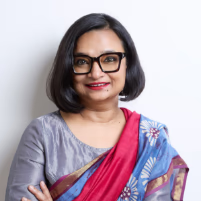
Nayana Chowdhury
CEO & Editor, Engendering Education
Nayana Chowdhury is the CEO of Breakthrough. With more than 25 years of experience in working in the social sector, Nayana vouches for the power of collective action in ensuring that it is the most marginalised who lead, both with their stories and in bringing together others in the community.

India Coalition for Education for Gender Equality
multi-pronged tool for gender relevant advocacy in education
The India Coalition for Education for Gender Equality is a multi-pronged tool for gender relevant advocacy in education. This umbrella of organisations touches more than 50 million students across India, nearly half of them girls, through partnerships with state education departments and public school systems.

Pam Rajput
Indian academic and feminist activist
Dr. Pam Rajput is an Indian academic and feminist activist, known for her work on gender and development issues in India and around the world. She has been a key figure in shaping the discourse around gender equity in India and has worked to promote women’s rights and empowerment across a range of sectors.
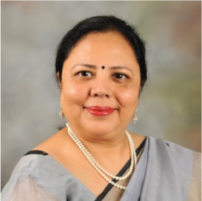
Dr. Rashmi Dwivedi
Punjab State Head,
Breakthrough
Dr. Rashmi Dwivedi, Punjab State Head at Breakthrough, is an educationist and gender expert with 30 years of experience across government and NGOs. She specialises in curriculum design, gender-responsive pedagogy, and textbook authorship. Bridging NEP 2020 with systemic change, she is also a skilled radio artist who has led impactful teacher training and educational media initiatives.

Sanjukta Mohapatra
Cluster Resource Centre Coordinator (CRCC),
Pipili block of Puri district, Odisha
Sanjukta Mohapatra is a Cluster Resource Centre Coordinator (CRCC) in Pipili block of Puri district, Odisha. Her journey to achieve the position of CRCC is one of determination and battling social odds. As a champion of gender equality, and a master teacher trainer, Sanjukta wants to see a more gender just and equal society.
ABOUT ENGENDERING EDUCATION
Education has a significant transformational power. Gender Transformative Education System (GTES) moves beyond just access to education, and rethinks gender norms and binaries, raises critical consciousness about inequalities, biases and stereotypes not only amongst students but also teachers, school administration, parents and other stakeholders. Such a system is also in sync with the United Nations’s Sustainable Development Goals (SDG), especially Goal 4 (particularly Target 4.7) and Goal 5 (Target 5.1) that talks about inclusive and quality education for ensuring gender justice for adolescents and young people in all their diversity. As Breakthrough, we believe that GTES will go a long way in removing barriers and boost progress and aspirations for adolescents and young people.
In keeping with Breakthrough’s vision, we present to you the Engendering Education magazine which is a first-of-its-kind pedagogical intervention that brings together sectoral experts, practitioners and thought leaders.
Through the conversations featured in the magazine, we aim to create a comprehensive compendium of practices, experiences and curriculums that rethink academic learning and prepares gender-just citizens for tomorrow. We hope that this magazine will meet some of the long pending needs for a more holistic dialogue on intersectional education practices and experiences.
PAST ISSUES
ISSUE 06
Feb 2026
Language in education serves as a powerful driver for dismantling entrenched gender norms in India, shaping young minds through textbooks, pedagogy, and classroom discourse. Language can also serve as an instrument in further entrenching these norms…
ISSUE 05
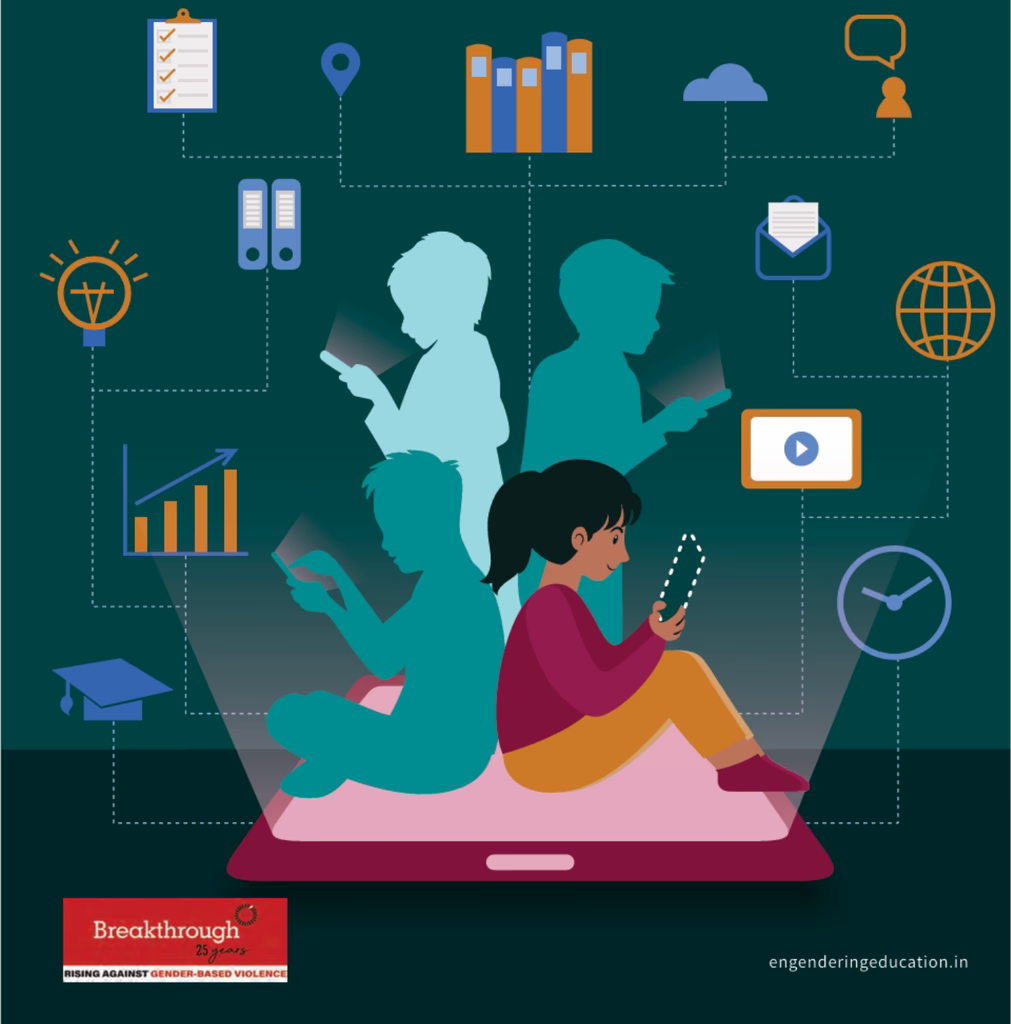
Aug 2025
Innovation is unfolding rapidly with recent giant advances in technology, especially the growth of Al which is significantly affecting all areas of human activity. Education too has not been left untouched. Like other…
ISSUE 04
Aug 2024
My aunt spent many years trying to teach arithmetic to Minnie, my cousin. She felt that by breaking down problems into stories, Minnie would deal with numbers with ease and would not develop a fear of maths,…