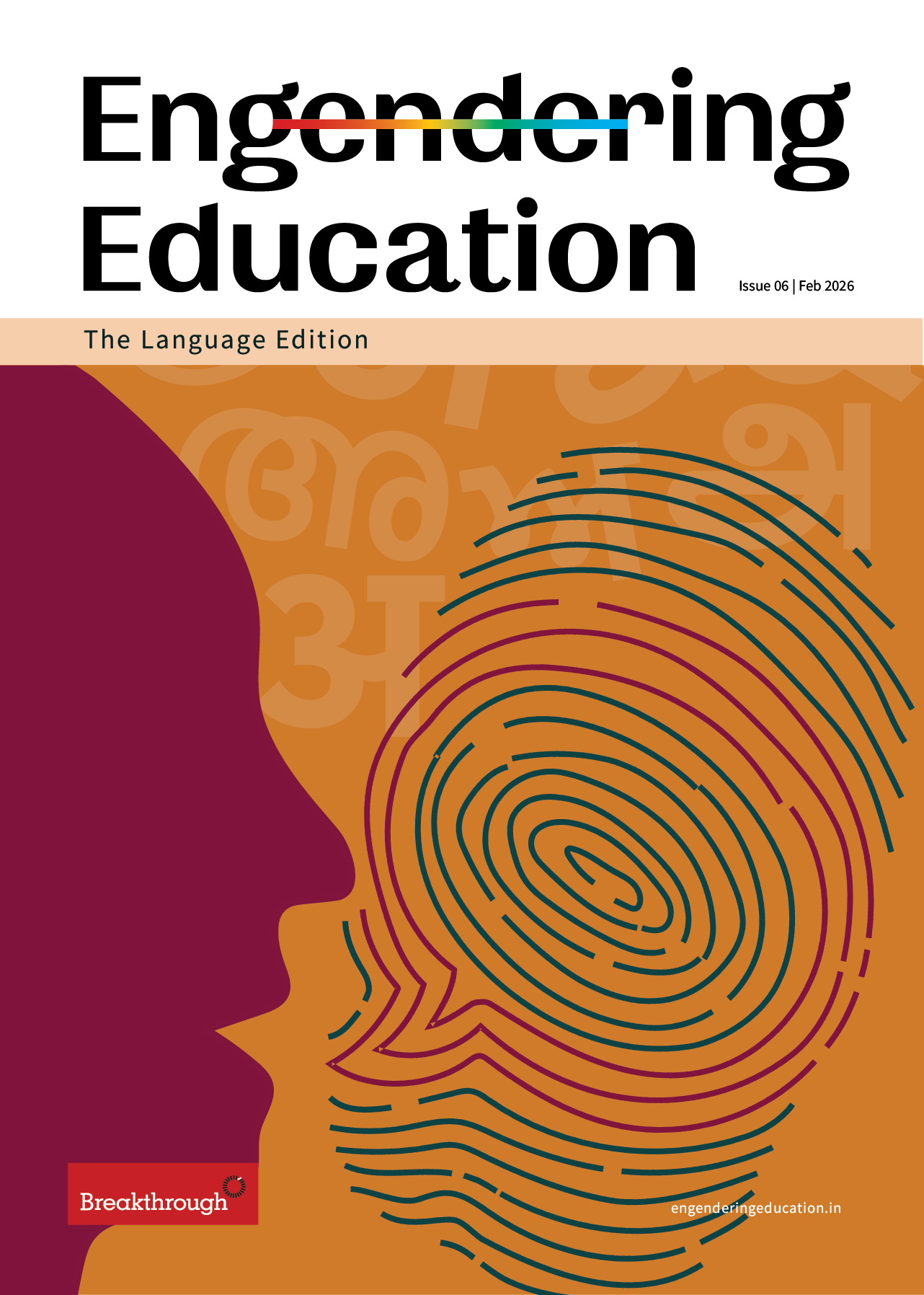
ENGENDERING EDUCATION
A Breakthrough Magazine

Empower. Educate. Transform.
COPYRIGHT
Engendering Education
Issue No.6
Editor-in-Chief:
Nayana Chowdhury
Commissioning Editor:
Urvashi Sarkar
Editorial Team:
Babita Pinto
Epti Pattnaik
Pritha Chatterjee
Saswati Chatterjee
Design & Illustrations:
Aditi Dash
Website Design:
Studio Gradient
Published by Breakthrough Trust, New Delhi, 2026.
Breakthrough Trust,
Plot-3, DDA Community Centre, Zamrudpur,
New Delhi, Delhi 110048
 contact@inbreakthrough.org
 inbreakthrough.org
Download this publication for free at:
engenderingeducation.in
Write to us at:
editorialteam@inbreakthrough.org
This publication is licensed under the Creative Commons Attribution NonCommercial ShareAlike 4.0 Unported
(CC BY-NC-SA 4.0). To view a copy of this license, visit: www.creativecommons.org/licences/by-nc-sa/4.0/.
All photographs used with permission from the contributors and their respective organisations.
Contents

| Nayana Chowdhury | THE LEDE |
Own Language
| Vasantshala | CLOSE UP |
Impact on Adolescents
| Swarnamayee Tripathy | COVER STORY |
Through Translation
| PARI | CHANGE MAKER |
Editor’s
Note
Nayana Chowdhury
Language in education serves as a powerful driver for dismantling entrenched gender norms in India, shaping young minds through textbooks, pedagogy, and classroom discourse. Language can also serve as an instrument in further entrenching these norms.
Textbooks often perpetuate bias by overrepresenting women in care-roles and underrepresenting them in professional spheres. A study of Indian social science textbooks found women depicted primarily in household tasks or menial labor, while men dominate leadership imagery, reinforcing power asymmetries and limiting girls’ aspirations.¹ Similarly, a Centre for Global Development analysis of 466 state board texts revealed stronger male bias in achievement-related language compared to global peers, with females linked to appearance over agency.²
Gender-inclusive phrasing in regional languages, such as neutral pronouns could subtly shift norms when embedded in curricula. Mother-tongue instruction amplifies this potential by enhancing comprehension and cultural relevance, indirectly advancing gender equity. Challenges continue to persist in gendered verbs and nouns across Hindi, Tamil, and other such languages. Languages like Bengali feature inherently gender-neutral pronouns which refer to individuals without specifying male or female, thereby ensuring that gender binaries are not reiterated through language. However, this in itself is not enough. Despite this apparent neutrality, gender biases persist strongly in West Bengal’s educational system, particularly in Bengali-medium textbooks.
Studies of primary and secondary texts from the West Bengal Board of Primary/Secondary Education reveal male-favoring imbalances: around 57% of representations depict males positively, versus 43% for females, with males dominating public / professional roles (e.g., leaders, adventurers) and females confined to domesticity or weakness.³
Gendered grammar in Indian languages implicitly upholds binaries, as well as associating bigger, more stable and stronger things with the male gender. Even those pockets of language that remained ungendered are not sufficient for norm change to ride on. However, inclusive curricula can cultivate reflexivity and critique inequalities. Initiatives like Supreme Court handbooks on stereotype-free language signal broader momentum. Kerala’s recent textbook revisions, introducing gender-neutral images like men in kitchens, exemplify reform efforts to counter such stereotypes. It is also relevant to highlight the Tamil Nadu Government Gazette’s LGBTQIA Glossary, an effort to aid gender-inclusive and trans-affirming discourse in Tamil.
These shifts demand urgent action: revise visuals and narratives, train educators in neutral discourse, and scale mother-tongue models.
In the field areas of Breakthrough, we often observe how language plays a role in keeping control in place. Being called a ‘bad boy’ is not as big a deal as being called a ‘bad girl’. The use of the word ‘bad’ is of very big consequence to a girl. In the case of boys and men, they are often made to comply with prevailing gender norms by either praising them as strong or criticizing them as weak.
The sixth edition of Engendering Education elaborates how deeply language is intertwined with the development of children and adolescents. It also highlights how education can either reinforce gender norms or work to dismantle them at a stage when ideas are still in the formative stage for young people.
The Cover Story by Swarnamayee Tripathy titled ‘Gendered Language And Its Impact On Adolescents’ is about how gendered language shapes adolescents’ identities and reinforces patriarchal norms. Through life-long socialisation, children and adolescents internalise these norms, affecting roles, laws, and everyday interactions. She also highlights recent efforts under the NEP 2020 to promote gender-inclusive language as a tool to challenge norms and foster equity.
We Close Up into how Vasantshala, run as a part of Bhasha’s Adivasi Academy responds to Adivasi children’s systemic exclusion from mainstream schooling by offering them residential, mother-tongue based egalitarian education.
Bhasha’s broader goal is safeguarding endangered Adivasi languages and culture while navigating the gendered nature of language and how schools shape ‘genderality’in children.
And ultimately, the Changemaker for this issue is the People’s Archive of Rural India (PARI) which publishes content in 14 Indian languages with the intention of democratising rural stories and fostering empathy across regions. Smita Khator and Priti David from PARI speak about how it fills curriculum gaps, through experiential modules that allow students to document issues of migration, labour, and women’s unpaid work. They also discuss how translation promotes solidarity and sheds light on nuance while pedagogy promotes critical thinking and active citizenship.
With this issue of Engendering Education, we hope to catalyse greater reflections on the language we use and its effect on gender norms and what role education can play. Enjoy reading!
Nayana Chowdhury
Editor-in-Chief, Engendering Education
An Education in Their Own Language
Vasantshala
Since 2006, out of school adivasi children have found hope and educational opportunities at Vasantshala – a residential school located in Tejgadh village in Chhotaudepur district in Gujarat. Vasantshala is an offshoot of the Adivasi Academy, which is part of a broader organization known as Bhasha.
The main objective of Bhasha is safeguarding the endangered languages and culture of Adivasi communities.¹ Bhasha’s special interest has been the adivasis, whose national population is about 104 million (Census 2011), and nomadic and denotified communities, whose population is estimated at 60 million.
At Vasantshala, children between the ages of 7-14 years receive education in their mother tongues such as Rathawi, Dhanki, Dungara Bhili and Nayaki.²
Language has a distinct role in society and is
intrinsically connected to gender, according to Dr. Ganesh Devy, a founding trustee of Bhasha. Devy, who led the People’s Linguistic Survey of India, says: “Humans have complex language abilities. Gender is mediated entirely through language – ie, a recognition of the self and the other. Language helps humans form societies and conduct rituals. When a human being is born, they are given a feminine, masculine or neutral gender. Gender is therefore not just a natural or a social question, but primarily a linguistic question.”
Language is itself gendered in India by making it a feminine being, [especially when referred to in languages like Hindi]. This is not the case in other languages like French or English, he goes on to add.
As Devy puts it: “Language is gendered in Indian consciousness. And, [at the same time], language [also] instills gender consciousness among humans.”
According to the Bhasha website, education in one’s native or ‘mother’ tongue encourages creative and confident expression, clarity of comprehension as well as critical thinking. And bilingual/multilingual proficiency enhances cognitive growth, social tolerance, divergent thinking and critical abilities.
With reference to regional and indigenous languages, the phrase ‘mother tongue’ is frequently used. Devy explains its origin: “The phrase ‘mother tongue’ was not used until the 1940s and was introduced by colonisers. The term settled in pedagogy in the 1950s and 1960s. In Constituent Assembly debates, people weren’t using the phrase mother tongue. Instead they referred to regional languages,” he says.
On the role of schools in socialisation, Devy feels that schools have themselves taken on the responsibility of socialising children. “If a human child is not processed through school, they are seen as non-social,” he explains. Students also imbibe ‘genderality’, a term Devy uses to describe an acute awareness of gender. “Schools socialise and apply gender frameworks which is essential to social frameworks. In addition to wearing uniforms and following discipline, [there are norms such as] boys must fight and play football, and girls cannot. ‘Genderality’ adds pressure on the child.”
There are, however, schools which allow all types of participation, he says, adding that children have a fairer sense of being humans than [just] being girls and boys.
Vasantshala’s approach towards education and
socialisation is distinct from mainstream schools. Apart from the emphasis on languages, Vasantshala emerged as a response to a range of challenges faced by adivasi children in receiving education. Gopsinh Bhai, who has been working
at Vasantshala since 2010, explains: “The geography of Chhotaudepur district is full of hills and slopes, making travel inaccessible. Some children drop out or migrate with their parents.
Some villages may have very few teachers. In government schools, teachers instruct in Gujarati, which adivasi children might not understand.” When they are unable to follow the language of instruction, students drop out. In some cases when children are not enrolled in grades that correspond to their age, as mandated by the Right to Education Act, it is difficult to enrol them later.
At the school, Adivasi children are brought to age-appropriate learning levels by first teaching them in their mother tongues and later transitioning them to the state’s medium of instruction, Gujarati.³ Gujarati is taught from Class IV or V onwards. The school gives primacy to orality and the cultural traditions of tribal communities in its educational curriculum and teaching-learning processes through stories, poems, songs and theatre. This flexible pedagogy is a trademark.
The ratio of girls and boys in each class is roughly the same.
In 2023-2024, Vasantshala had enrolled children across Class I to V. Prioritising girl’s education, 45 percent of the enrolled children comprised girl students (24 girls and 30 boys).⁴
In the institute’s early days, the number of girls was fewer, but the numbers are increasing with the rise of awareness about education, says Gopsinh. Boys and girls used to get married earlier, but now marriages are delayed. Girls who transition from Vasantshala to other schools now have different ambitions ranging from nursing, teaching, and further studies. Everyone aims to take up some line of work, whether tailoring or working part time.
A layered education which recognises their needs and languages is helping students at Vasantshala to explore their potential and facilitates the transition to mainstream education.
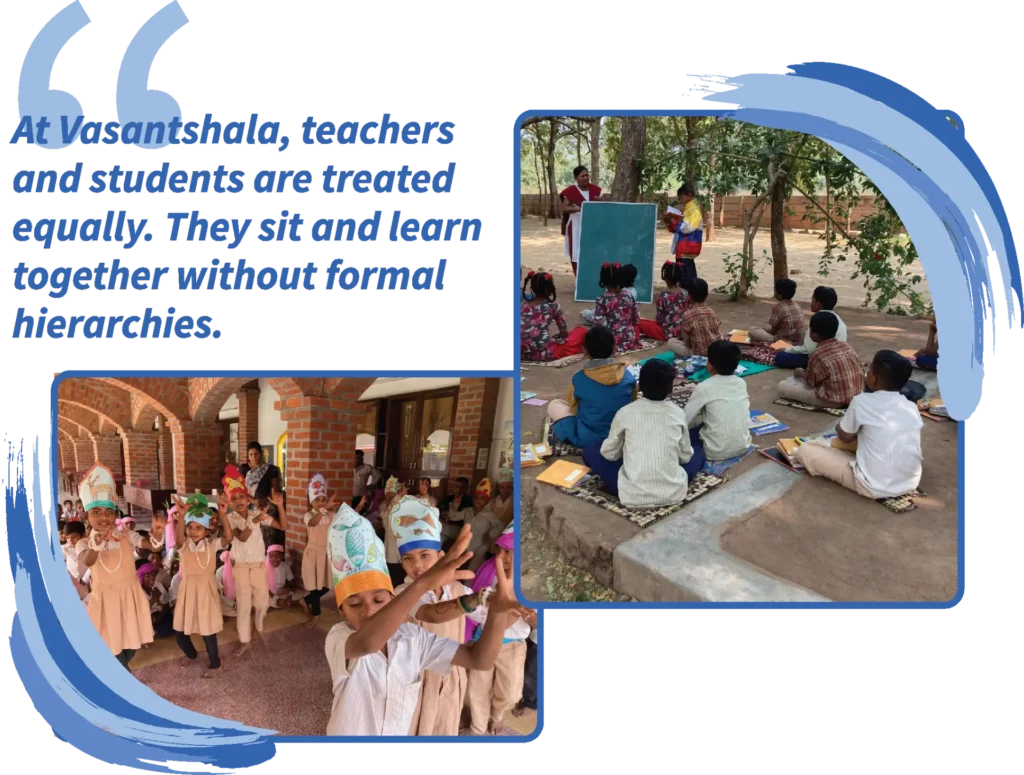
Students from Vasantshala, Photos: Vasantshala/Adivasi Academy
SOURCES:
1 https://bhasharesearch.org/about
² https://ruralindiaonline.org/article/playing-with-diversity
³ https://azimpremjiuniversity.edu.in/lessons-from-practice-series/safeguarding-tribal-languages-lessons-from-the-bhashas-adivasi-academy-tejgadh
⁴ Bhasha Research Annual Report 2023-2024. https://www.bhasharesearch.org/files/Bhasha%20Annual%20Report%2023-24%20F.pdf
Gendered Language and its Impact on Adolescents
Swarnamayee Tripathy
Adolescence is a stage in the life cycle that comes between childhood and adulthood. It is the pivotal period when individuals form their sense of self, negotiate with social expectations and define their roles in society. Adolescents in this stage of life move away from family-based identities to identities based on a hetero-social peer social order. And in this hetero-sociability, gender plays a critical role, as does language – not merely as a communication tool but as a transmitter of cultural values and gender norms.
Understanding Gendered Language
Gendered language refers to the linguistic expressions, speaking style and words that establish a difference and draw an invisible line between masculinity and femininity. It is embedded in our way of addressing people, describing behaviours and assigning traits. Words like ‘macho’, ‘bossy’ or ‘ladylike’ may appear acceptable, but actually reflect ingrained beliefs about how boys and girls, men and women and people of other genders should act. These linguistic expressions subtly express the invisible boundaries of acceptable behavior for different genders.
The main elements of language are morphology (structure), phonology (sound), syntax (grammar), semantics (meaning), and pragmatics (use of language in different social contexts). The aim of pragmatics, for example, expresses the intent of the speaker, the situation and social relationships. Drawing from the above it can be understood that language, symbols, social practices and learning, which inform the cognitive learning of adolescent children, also have a gender dimension.
Contemporary discourses on ‘inclusive language’ take us to the book Man Made Language(1980) by Dale Spender.¹ She argued that language is not a gender-neutral communication system, but a patriarchal construct.
Children learn language through consistent passive exposure to phonology, syntax, semantics and pragmatics. This process is a significant part of early childhood socialization and contributes to personality development in adolescents (across all genders).
Splender highlights that in many languages across cultures, male-centered terms and experiences are treated as the norm, such as the word ‘mankind’. These words are supposed to include everyone, but ultimately make women invisible.
For example: the American Declaration of Independence uses the phrase ‘All men are equal’, but the American Constitution, drafted in the late 18th century, ended up excluding women from the political sphere and deprived them of voting rights. American women had to accept this for several decades and won voting rights only in 1920.
Early Socialisation and Language
Gender does not unfold naturally from biology, nor do life stages: childhood, adolescence, adulthood and old age. Biology imposes some limitations and culture takes off from those constraints. Early investigations on adolescent socialisation posit that during adolescence, parents, peers and teachers convey social expectations to the growing child. Initially, the child at an early age may question these expectations, but gradually accepts the expected traits. An adolescent passively and individually receives knowledge and skills from adults. Their role-taking and role-playing are also influenced by socialisation in childhood.
Socialisation is a lifelong, continuous process by which, through social interaction, we learn a society’s total way of life and guidelines for appropriate behaviour; to develop our sense of ‘self’ and human potential. Socialisation moulds our beliefs and behaviour towards all social groups. It transmits essential cultural elements to the next generation.
Gender socialisation, therefore, is the process by which individuals learn the cultural behavior of femininity or masculinity that is associated with the biological sex of female or male. It teaches gender appropriate roles and languages. And the social control mechanisms that guarantee gender role compliance are often informal but very powerful, including ridicule, exclusion from peers, and loss of support from family and colleagues. Gender socialisation is so pervasive that even the law is impacted, such as the Hindu inheritance and guardianship laws. For example, fathers may be denied custody of children on the basis of gender stereotypes that view men as inherently incapable of child rearing.
Language is a powerful instrument in gender
socialisation. Primary socialisation literally bombards children with mountains of information and learning. This process includes both verbal and non-verbal rules and the complexities of language. Language reflects culture and is shaped by it and therefore, fundamental to our understanding of gender. Language indicates the status and role assigned to a particular gender. In language learning, for example, children and adolescents are taught that genders are valued differently.
Linguistic Expressions of Emotion and Identity Development
All languages continuously focus on gender. For example, It’s a man’s world, history, businessmen, congressmen, mankind, etc.
Language is also unsympathetic to women; for
example, the word ‘witch’ categorically points to a woman. The pictures of a witch have always been of a woman. In the Odia language, the word ‘dahani’ (witch) has no male form. In the Sanskrit language, ‘Swami’ means the husband. In the Odia and Hindi languages, the words ‘pati’ and ‘patni’ are used to describe a husband and a wife respectively. The husband of a village head (‘Sarpanch’) who is a woman has been popularly called a ‘Pradhan Pati’.
Gendered expressions have stereotyped men too. The word ‘maichia’ (effeminate) is used to describe a boy who is sympathetic to a girl and defends her, similar to how a man defends his wife.
National Education Policy 2020 and childhood education
Keeping in mind the impact of language on adolescents and their overall development and gender socialisation, the elephant in the room are education systems and policies.
We must ask: To what extent are educational policies cognizant of the need of adolescents for gender sensitive language? The National Education Policy 2020 focuses on equitable and inclusive education and prescribes approaching gender “as a cross-cutting priority to achieve gender equality in education with the partnership of states and local community organizations.”³ Samagra Shiksha Abhiyan 2.0 has introduced various interventions and gender sensitive teaching-learning materials, including textbooks in school education, to promote gender sensitive behavior among children. Odisha and Punjab have prepared workbooks to acquaint children with gender-sensitive language in communication.
Further, NEP also mandates that state governments should develop gender-sensitive curriculum, remove gender stereotypes from textbooks and adopt a gender inclusive pedagogy. Therefore, more needs to be done towards incorporating recognition of the third gender in curriculum and textbooks through inclusive language. The Supreme Court of India has also published a Handbook on Combating Gender Stereotypes.⁴
The above analysis does not deny that social changes have brought in transformations in social practices and literary expressions. Because gendered language has worked to the detriment of women’s position in the family and society, we recognise that in order to counter it, gender inclusive language can be a powerful tool for reshaping societal attitudes and dismantling sexist ideas.
SOURCES:
1 Splender Dale, (1980) Man Made Language, Routledge & Kegan Paul Ltd., London
² Senapati, Fakir Mohan (1898) Rebati (in Odia Language)
³ Ministry of Education, (31 July 2023) National Education Policy, 2020, Press Information Bureau, Govt. of India
⁴ Supreme Court of India, (2023) Handbook on Combating gender Stereotypes, https://cdnbbsr.s3waas.gov.in/s3ec0490f1f4972d133619a60c30f3559e/uploads/2024/01/2024012544.pdf
Language and Curriculum Through Translation
PARI
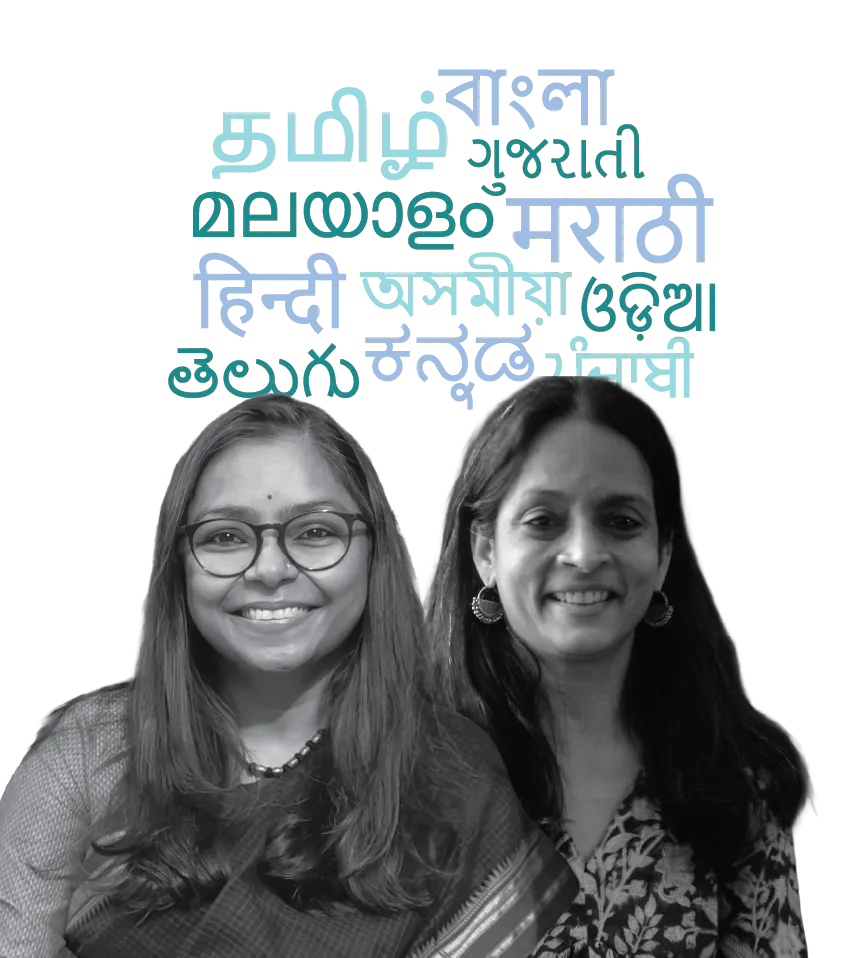
The People’s Archive of Rural India (PARI) has made a name for itself by publishing detailed reports of the everyday lives of Indians, particularly focusing on rural India. The rhythms of existence of labourers, farmers, artisans and fishing communities — through their highs and lows — are made to come alive through text, photos, and videos.
Multilingual content is an important part of PARI, where each story is available in several languages. Serving as an educational model is also core to its mission. PARI’s content has travelled to several schools and colleges across the country where it has become part of curriculum and pedagogy.
Engendering Education speaks to Smita Khator, Chief Translations Editor — and Priti David, the Executive Editor who leads the organisation’s education arm — about PARI’s role in language and education.
Smita Khator (Chief Translations Editor)
What is the importance of multiple Indian languages to the vision of PARI?
Languages are fundamental to PARI’s coverage since we focus on rural India. PARI started as an English language journal but its spirit has been multilingual since the point of its germination. PARI’s main focus is the ‘everyday lives of everyday people’ and therefore, regional languages are core to our work. Each of our stories are based on field reports focusing on the lived experiences of people who speak to us in their languages.
When we publish in English, we also publish in 14 Indian languages. We do not have a compartmentalising policy that Maharashtra’s stories should be available only in Marathi. The idea is that someone in the Bengal delta should, in their own language, be able to read/know about the fishing community in Tamil Nadu and understand that both their realities are part of the same and larger issues related to policies and shared history.
Hence it should be disseminated in as many languages as possible. Most importantly, PARI translations are not merely a linguistic exercise, or making everything available in English. It is about engaging with realities, contexts, cultures, idiomatic expressions in the language it was originally written in. Thus, negotiating with languages is integral to PARI.
PARIBhasha – the language universe of PARI – is based on the principle of democratisation of languages as opposed to having one language that would rule the world’s most complex and diverse linguistic region.
How do you think PARI's twin objectives of languages and education intersect?
We view education from a specific lens, especially from the perspective of young adults who we want to make aware of rural realities. This isn’t possible unless done in various languages. Our entire system is geared towards English wherein the language is treated as a currency. Many languages are being lost in the process. Adivasi communities, for example, are made to study in English or Bengali medium schools [where their own languages are not encouraged]. Language also undergoes shifts through migration when labourers migrate to various states for work.
In a society where proficiency in the English language adds to one’s social currency, publishing a story in multiple languages becomes extremely helpful in various ways. Students and researchers can improve their English and
also learn to read and write well in their mother tongues if they didn’t get the opportunity to do that so far. PARI is not subscription based and that allows common pupils to access our content that’s produced through rigour, field work, training and thorough research.
What aspects of gender emerge during the process of translations?
I would personally want to translate more work
written by women about women’s lives. At a basic level, this is important. As mentioned, translation is not merely a linguistic act. It’s also a vessel to transfer an idea into another language. Reading Angela Davis, Aama Ata Aidoo and Ismat Chughtai in translation worked as a stream of consciousness for me. Gathering resilience from their work, I could situate myself — a second-generation learner and the first graduate girl from my family — into the larger scheme of things. And now, my aim is to disseminate the realities, lived experiences, stories of struggle and triumphs of women in the margins to a larger community of women readers and forge an idea of sisterhood and solidarity.
What else emerges in the process of translations? Do we learn more about inequality, class and other characteristics of Indian society?
I look at translation from the lens of social justice. In general, translations allow you to forge connections with hitherto unchartered territories. You get to know about caste realities, ecological catastrophes, food cultures, knowledge systems without moving a single step. But these are immense leaps towards becoming a person with empathy and kindness — to be radically changed — knowing different realities and then actually reaching out to people and places. When I translate or read something via translation, this back and forth forges a bigger, wider, boundariless view of the world and helps overcome my own narrowness.
Priti David (Executive Editor)
What does a PARI Education entail,
and why is it important?
PARI believes that a good education is one which forces us to think and examine the major issues of our times, especially inequalities and injustices around us. A PARI story provides the tools for a teacher to bring this to the classroom, to introduce multiple realities while examining social, economic, cultural and other issues present in its stories.
If the curriculum is a specific set of subjects to be learnt, we need to ask what students across the country are not learning.
Young people today are disconnected from the everyday, disassociated from who grows their food, the migrants who build the cities they live in or aspire to live in, the challenges of marginalised people, the loss of traditional and often sustainable livelihoods, and more.
When students can critically examine the world around them, it is the first step in building empathy. It also encourages them to become active citizens, invested in their country and democracy.
So although a journalism website, PARI serves as a textbook for our times. And a PARI Education fills the gaps in the current curriculum by providing the here and now of the world around us.
What are the types of pedagogies adopted?
PARI Education’s pedagogy is experiential learning. We want students to learn by doing, and we design learning modules that rely on actual experiences. We believe that the best learning happens in familiar surroundings, so we stay close to students’ home locations. We get students who intern with us directly or through their institution, to explore and produce journalistic writing. The result is hundreds of stories — on craft, labour, health, education, climate change and more — reported in multiple Indian languages, on our site.
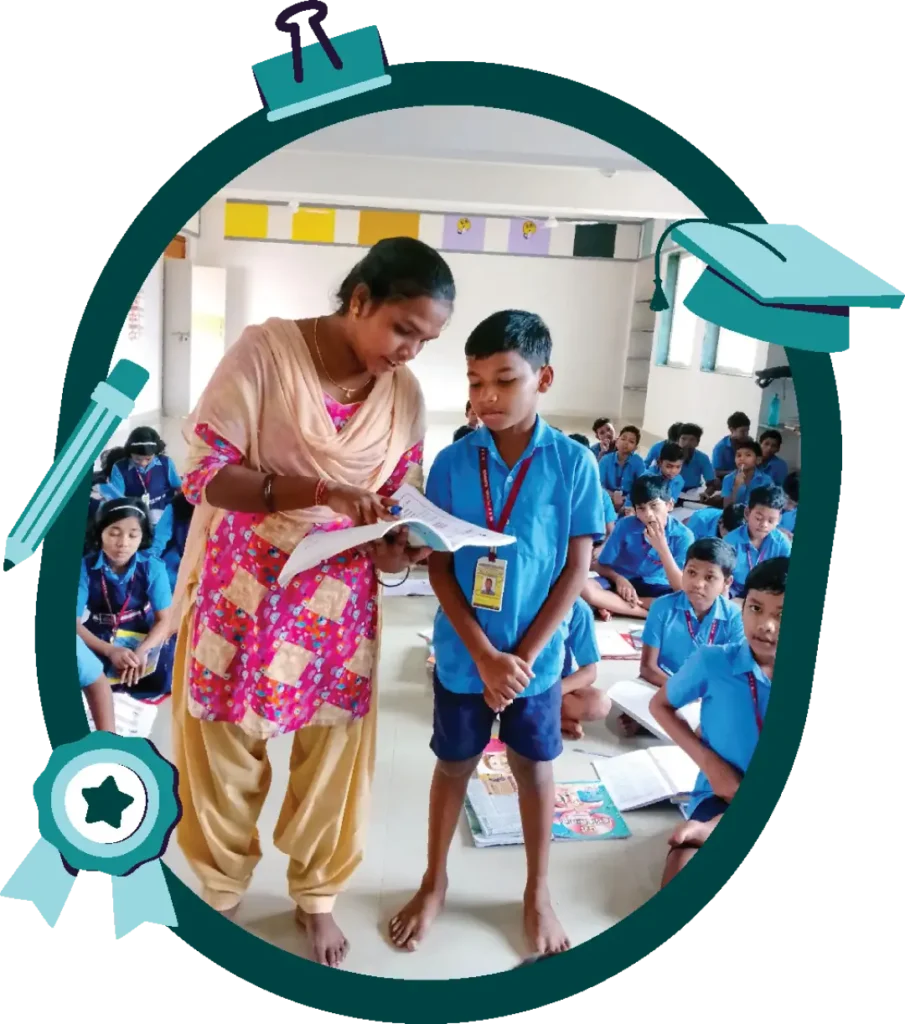
Jyoshna Gamango, a Saura Adivasi, juggles studying for a bachelor's degree while teaching in a primary school. Photo by: Harish Chandra Dalai, Credit: PARI Education
For example: We asked urban school students of Class 11 to write about the experience of migrants in Bangalore – construction workers, vendors, drivers, cooks and so on. We designed the questionnaire and format in such a way that the instruction was scaffolded, and students felt supported. We carried the best work on PARI and titled it: ‘Profiles of Migrants: Journeys of Hope’.
We worked with Class 4 and 5 students in rural Odisha who documented the weekly haat (market) in their area for us. In the process they learnt about their own community. As did students in Uttarakhand. Another student told us that he knew little about the people in his village. He told us that he realised that the history of a community stays alive in its anecdotes and stories. Writing sensitively and with empathy while doing journalism is another trait that students learn.
How do PARI’s objectives of languages and education intersect? What are the takeaways for students while learning from PARI?
When we go to classrooms, we are asked to teach and communicate almost entirely in English since teachers want students to be fluent in the language. Or, we mix English and Hindi while speaking. We also play translation games where we urge students to think of various meanings. They also learn that Google Translate cannot always convey the essence of a language. Students submit stories to us in languages other than English too, such as Hindi,
Marathi and Tamil.
There was a change in the way they viewed migrants into big cities – a school student couldn’t imagine anyone migrating from their homes for 10 months a year to earn just an extra thousand rupees every month. The failure of agriculture was another big learning, as most migrants said that farming was no longer sustainable.
Another student covering craft found that women rarely talk about their labour – even if most of the work is being done by them.
Overall, I would say that students who work with PARI grow in empathy and interest in ‘other’ people’s lives, have the tools to critically examine privilege, are supported in asking questions about fairness and justice, and take away a better understanding of the role of good journalism in society.
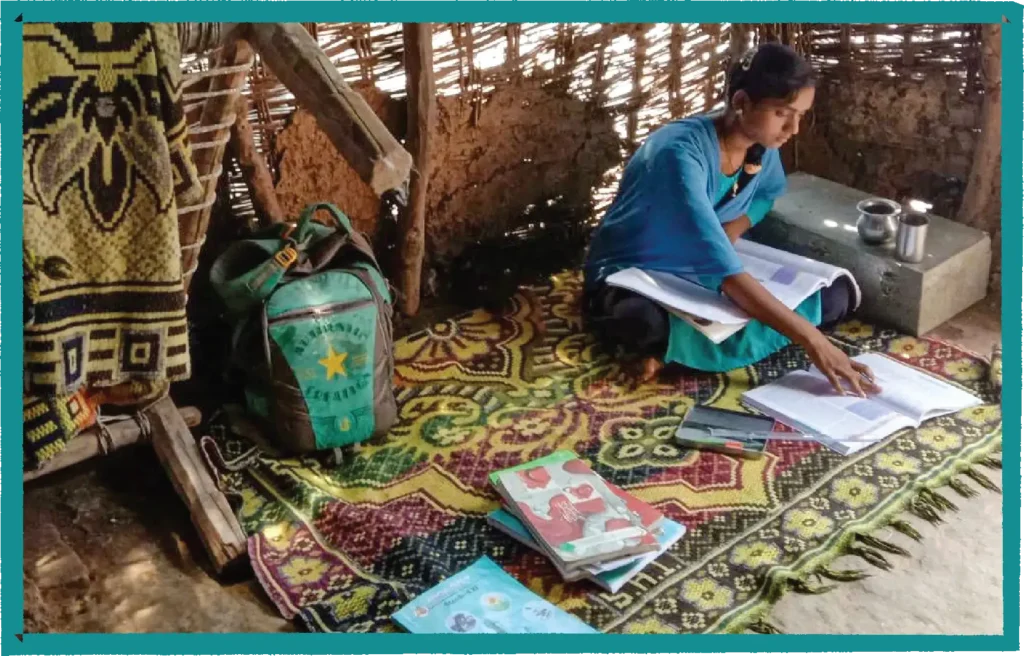
Jamuna of Maharashtra is the first ever girl in her community of beggars to reach Class 10. Photo by Anjali Sukhlal Shinde, Credits: PARI education
Meet The
Contributors

Nayana Chowdhury
Nayana Chowdhury is the CEO of Breakthrough. With more than 25 years of experience in working in the social sector, Nayana vouches for the power of collective action in ensuring that it is the most marginalised who lead, both with their stories and in bringing together others in the community.

Swarnamayee Tripathy
The author is a former Professor in Public Administration and Coordinator, School of Women Studies at Utkal University, Bhubaneswar, Odisha. Currently, she has been designated as a Senior Fellow by the Indian Council of Social Science Research.

Vasantshala
Vasantshala offers mother-tongue and multi-lingual education to children. It gives primacy to orality and the cultural traditions of tribal communities in its educational curriculum and teaching-learning processes. It also aims to provide access to quality education to tribal children, bridges the learning gaps of out-of-school tribal children and helps them attain age-appropriate learning levels. The institution is part of a broader umbrella group known as Bhasha in Gujarat.
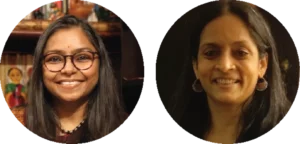
Smita Khator & Priti David
Smita Khator, Chief Translations Editor at People’s Archive of Rural India (PARI), works to expand the linguistic reach of PARI by monitoring various aspects of translation. Priti David, the Executive Editor, leads PARI Education – the organisation’s education arm.